

Arbequina, Hojiblanca and Picual: The Three-Second Test That Tells You Which One You're Tasting
Updated: August 2026
Three names keep showing up on olive oil labels: Arbequina, Hojiblanca and Picual. Most people have read them a thousand times without really knowing what they mean.
Migue can tell them apart without looking at the label. All he needs to do is swallow and count to three.
The test takes two minutes to learn, and you can try it tonight in your own kitchen with the oil you already have open. We walk you through it below, along with a table of the three varieties and what each result means.
A word of warning: there's one possible result nobody likes. We'll also tell you what to do if you get it.
In this article
- What sets Arbequina, Hojiblanca and Picual apart?
- How can you tell which variety you're tasting without looking at the label?
- What if you notice absolutely nothing?
- Does the variety explain everything, or does the olive grove have a say too?
- Why does Migue blend all three varieties in the same jerrycan?
- Where can you actually taste the difference between supermarket oil and oil straight from the mill?
- How much does an oil like this cost per day?
- What do people who already do the test at home say?
- Frequently asked questions
What sets Arbequina, Hojiblanca and Picual apart?
Each olive variety produces an oil with its own aroma, bitterness, pepperiness and resistance to the passage of time. Arbequina is the smoothest and sweetest, with hints of almond. Hojiblanca sits in the middle: grassy, with a light peppery finish. Picual is the most intense and the most stable, with notes of tomato plant and a pronounced peppery kick in the throat.
All three are olive varieties, just as Tempranillo and Grenache are grape varieties. And as with wine, the variety shapes the flavor long before the brand on the bottle does.
| Arbequina | Hojiblanca | Picual | |
|---|---|---|---|
| Origin | Arbeca (Lleida); now also Andalusia | Lucena and the surrounding area: Córdoba, Málaga, Seville | Jaén, as well as Córdoba and Granada |
| Ripening | One of the earliest to ripen | Late | Mid-late |
| Aroma | Apple, almond, banana | Freshly cut grass, almond | Tomato plant, fig tree, olive leaf |
| Bitterness | Very low | Mild | Medium-high |
| Pepperiness | Barely noticeable | Light, fades quickly | Pronounced and lingering |
| Stability | The most delicate | Medium | The highest: up to 80% oleic acid |
| Pairs well with | Baking, mayonnaise, delicate fish | Gazpacho, salmorejo, oily fish, toast | Tomato, meat, stews, high-heat cooking |
These are typical profiles, not hard rules. The same variety planted somewhere else produces a different oil — more on that a little further down.
If you want to go deeper into each one, we have a dedicated article on Arbequina, another on Hojiblanca and another on the character of Picual.
How can you tell which variety you're tasting without looking at the label?
Put a teaspoon of oil in your mouth, no bread. Spread it over your tongue for a few seconds and pay attention to the aroma and the initial sweetness. Then swallow and count to three. What happens in your throat from the third second onward is the variety's signature.
Step 1 — No bread. Bread soaks up the oil and softens everything that comes after. For this test, straight from the spoon.
Step 2 — Spread and smell. A few seconds on the tongue, with your mouth slightly open. This is where the first impression shows up: sweet in Arbequina, grassy in Hojiblanca, tomato plant in Picual.
Step 3 — Swallow and count to three. Now read your result:
- Almost nothing, with a sweet almond background → Arbequina.
- A gentle peppery tingle that appears and fades within a few seconds, with a hint of grass → Hojiblanca.
- A scratch at the back of the throat that takes its time to go and might even make you cough → Picual. Tasters even have a name for that cough.
- Nothing at all: no sweetness, no grass, no pepperiness → keep reading, the next section is for you.
An honest caveat: intensity also depends on where the olive was grown, when it was harvested and how long the oil has been in the bottle. A year-old Picual is noticeably less peppery than one that's freshly pressed. The test is a very good guide; it's no substitute for a professional tasting panel.
|
★★★★★ “I love cooking and I've always tried to use the best oils. I've bought all sorts of supposedly prestigious brands... its flavor is smooth, a little bitter, yet sweet and peppery at the same time — well, an explosion in your mouth.” — Mari Santos Chica Carrero, Madrid · Verified buyer |
Notice what Mari describes without even meaning to: sweet, bitter and peppery in the same spoonful. All three signatures at once. There's a reason for that, and you'll see it two sections down.
What if you notice absolutely nothing?
If there's no sweetness, no grass and no pepperiness, your oil is most likely a blend with no declared variety, made from late-harvested olives and bottled many months ago. Bitterness and pepperiness are the signal of polyphenols: when you can't taste them, there aren't many left.
Here's the uncomfortable part: a blank result says nothing about your palate. It says everything about your bottle.
An anonymous oil is made by blending olives from different origins and different seasons so the flavor always comes out the same and doesn't bother anyone. The olives are picked late, when they yield more liters and less character. Then the oil spends months on a supermarket shelf, exposed to light and heat.
Polyphenols are exactly what gets lost along the way. And they're the very compounds that make Extra Virgin Olive Oil one of the most studied foods in the Mediterranean diet. That scratchy pepperiness isn't a flaw to put up with: it's the receipt for what's inside.
By the way, if your oil spent the summer on the counter next to the stove, the heat has done its share of damage too.
I want to feel those three seconds
Does the variety explain everything, or does the olive grove have a say too?
The variety sets the family of aromas, but it doesn't have the final word. Soil type, altitude, climate, how much water the tree received and the timing of the harvest all shape the oil that comes out. A Picual grown in one place and a Picual grown in another produce recognizably different oils, even though they share a name.
It's the same with grapes. A Tempranillo from Rioja and a Tempranillo from Ribera del Duero are the same variety, and nobody mixes them up in the glass. It's not the grape that changes: it's everything else.
With olives, “everything else” means very specific things. The soil the tree draws its minerals from. How thirsty it's been that year, because an olive tree that has struggled a little concentrates more. The swing in temperature between day and night in the weeks when the olives begin to change color. And above all, the day someone decides it's time to start picking.
That's why Designations of Origin never protect a variety on its own: they always protect the variety and the area together. Separately, neither means enough.
What this means for your bottle is simple: reading “Picual” on a label tells you the family, not the accent. It tells you what tune it will play, not how it will sound.
Our accent comes from the Olivar de San Miguel, in the countryside around Puente Genil, Córdoba. And that's where all three varieties in this article grow, side by side.
Why does Migue blend all three varieties in the same jerrycan?
Because each one brings something the other two lack. Hojiblanca contributes the fresh-grass aroma and the sweet opening. Picual brings structure, pepperiness and stability. Arbequina rounds it all off and smooths the edges. Together they make a complete oil; on their own, each is a single note.
All three grow in the Olivar de San Miguel, in Puente Genil. And that's where the real work begins, because each variety ripens in a different week. Picking the Picual on the day meant for the Hojiblanca changes the whole oil.
That's the craft: deciding when each variety comes in and in what proportion they're blended. Our head miller sets the exact proportion every season, depending on how the year has gone — the rain, the heat, the state of the fruit. There's no fixed formula written down anywhere, which is why one year's oil is never quite the same as the last.
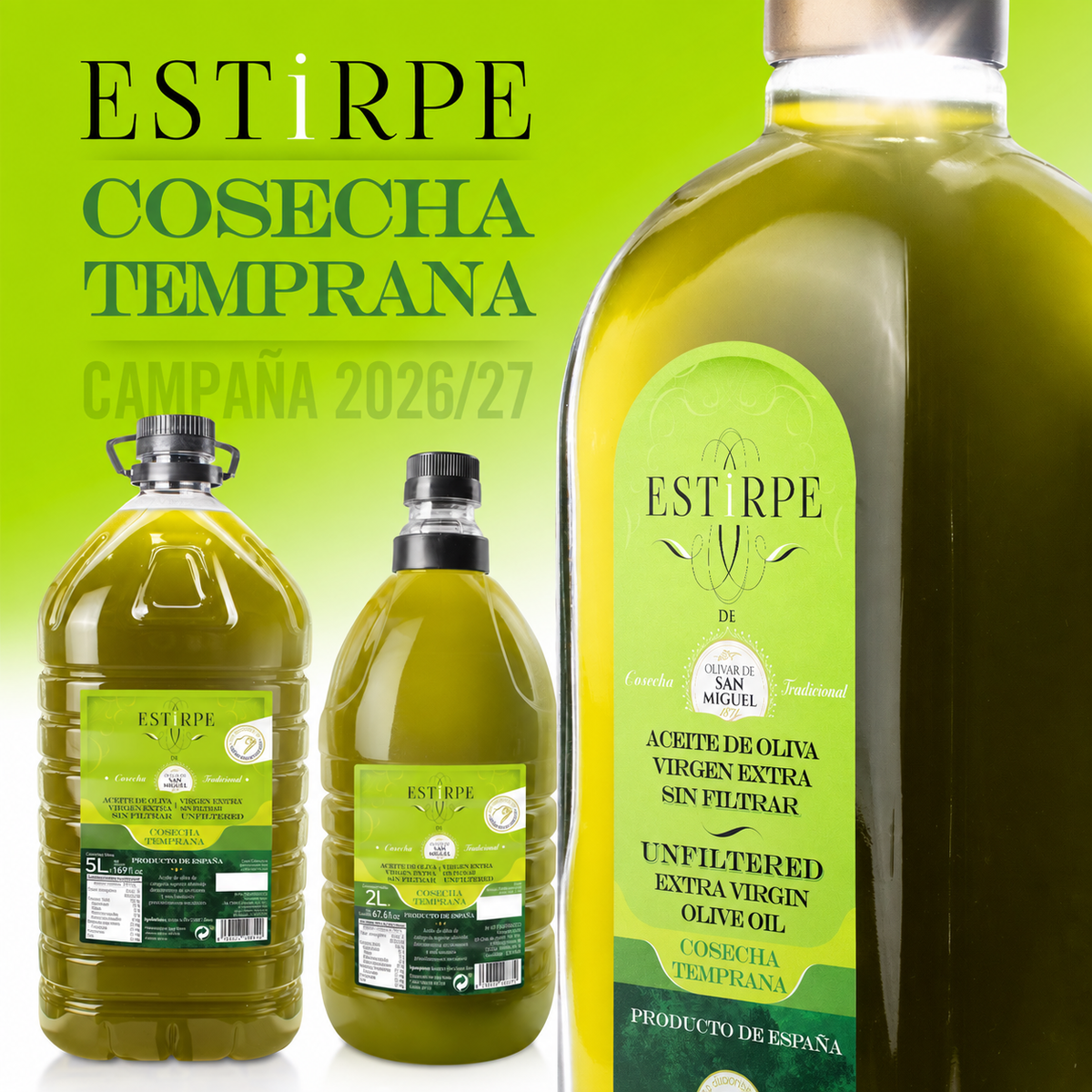
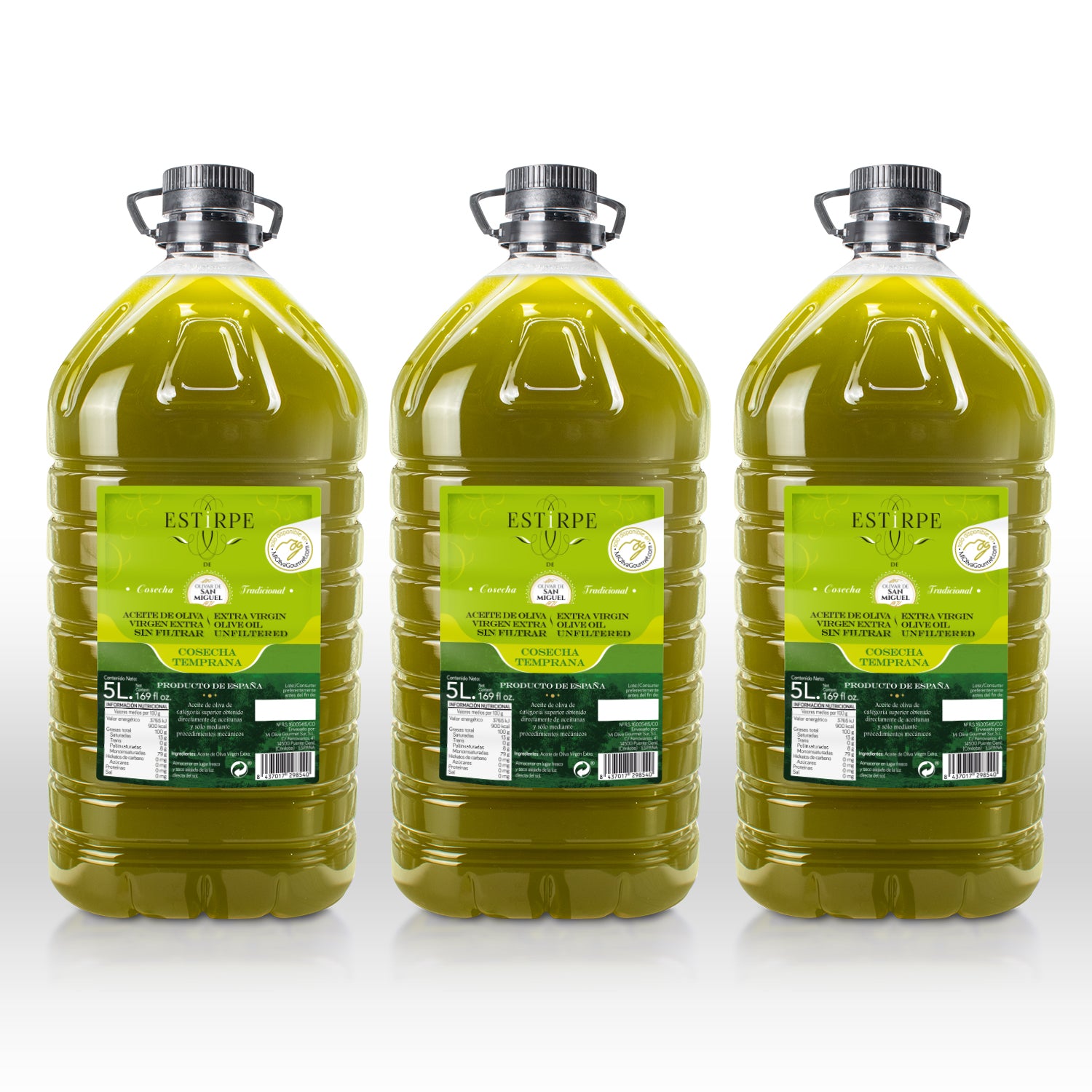
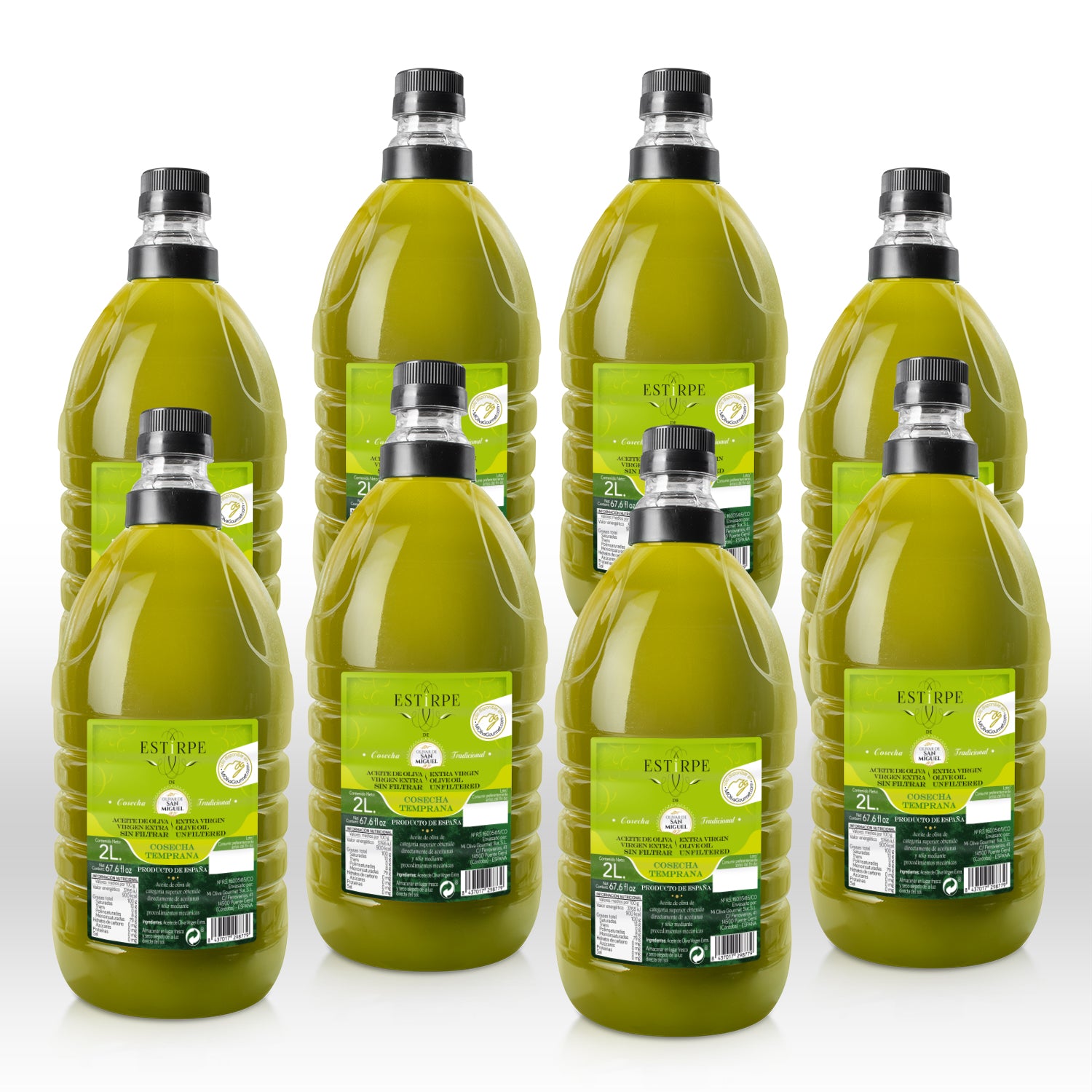
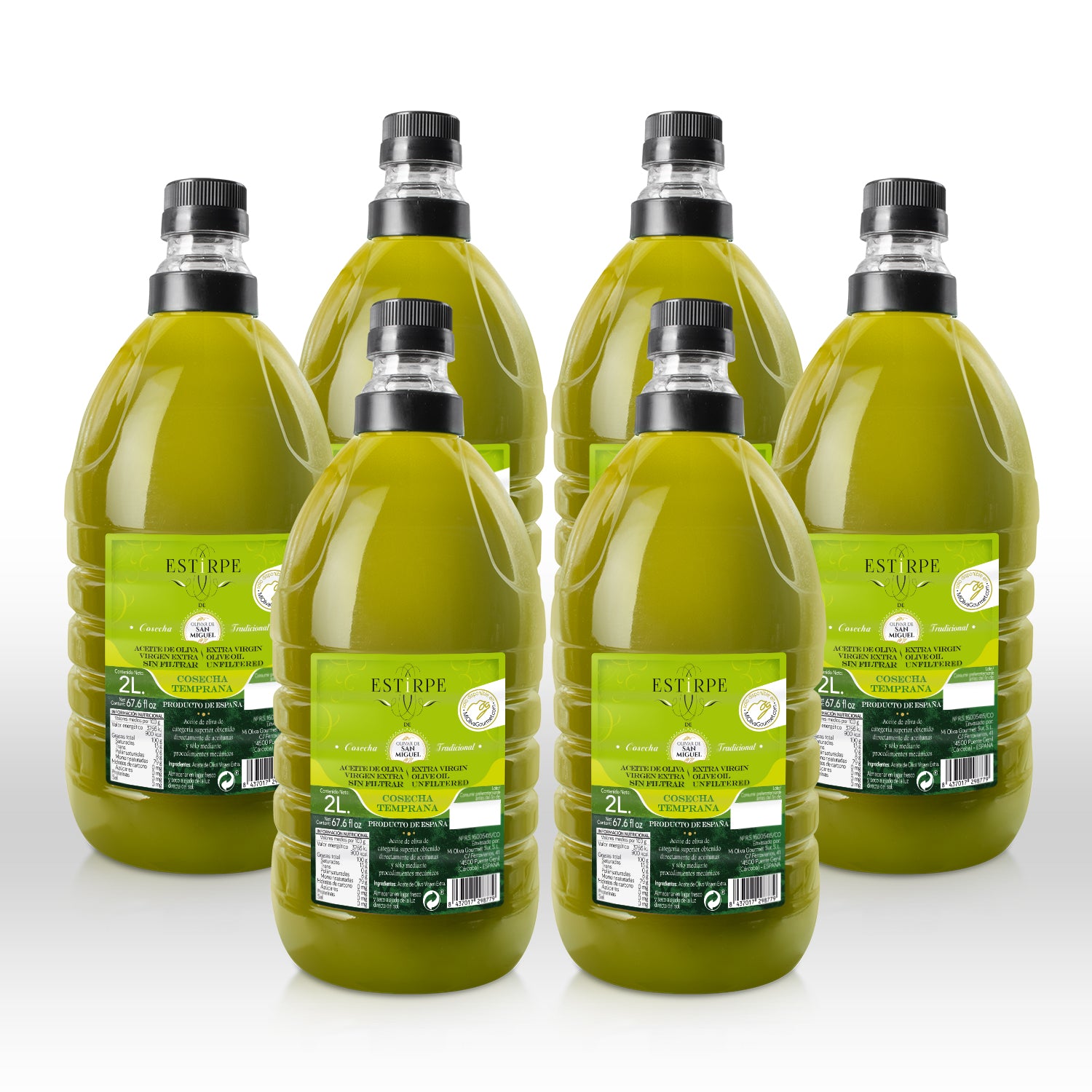
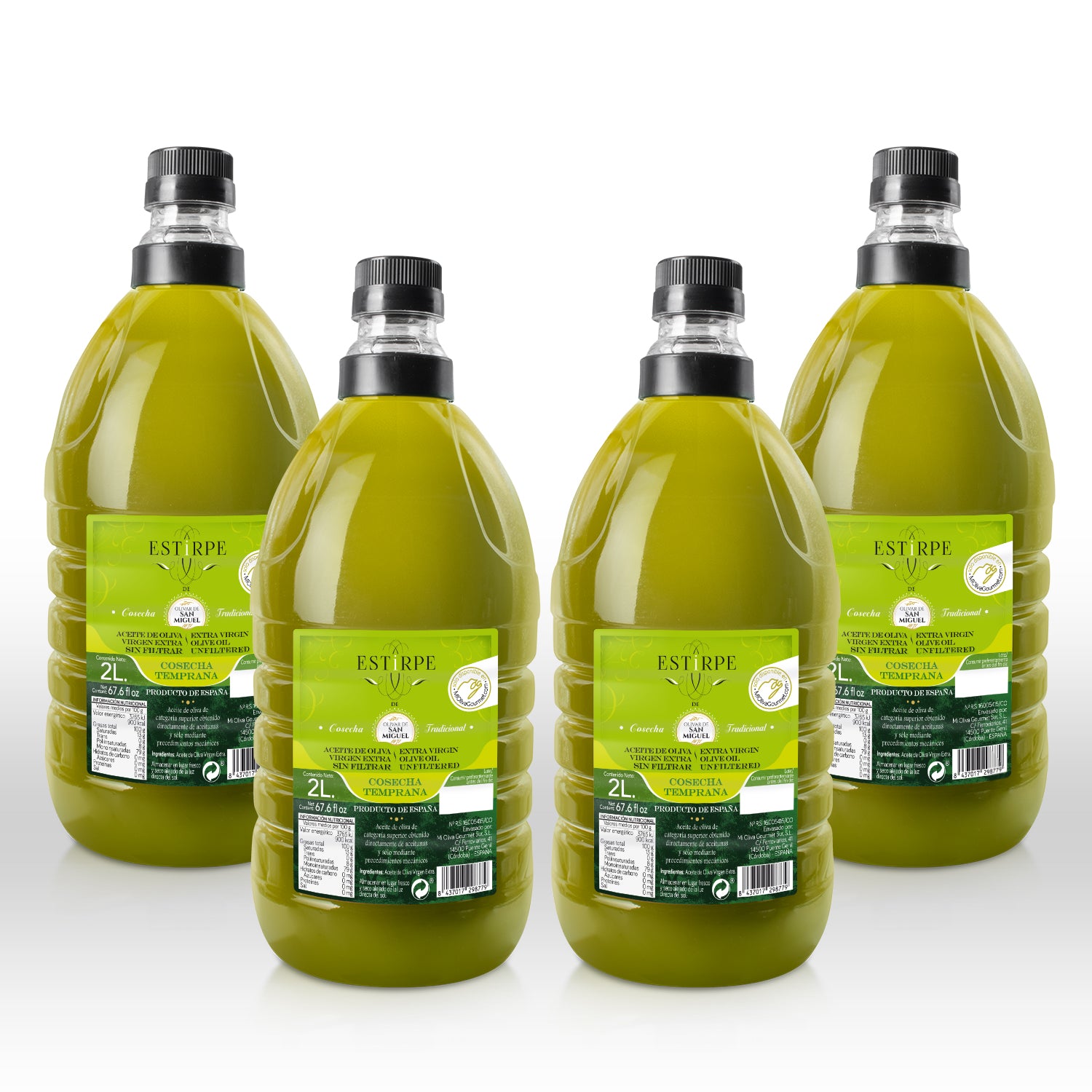
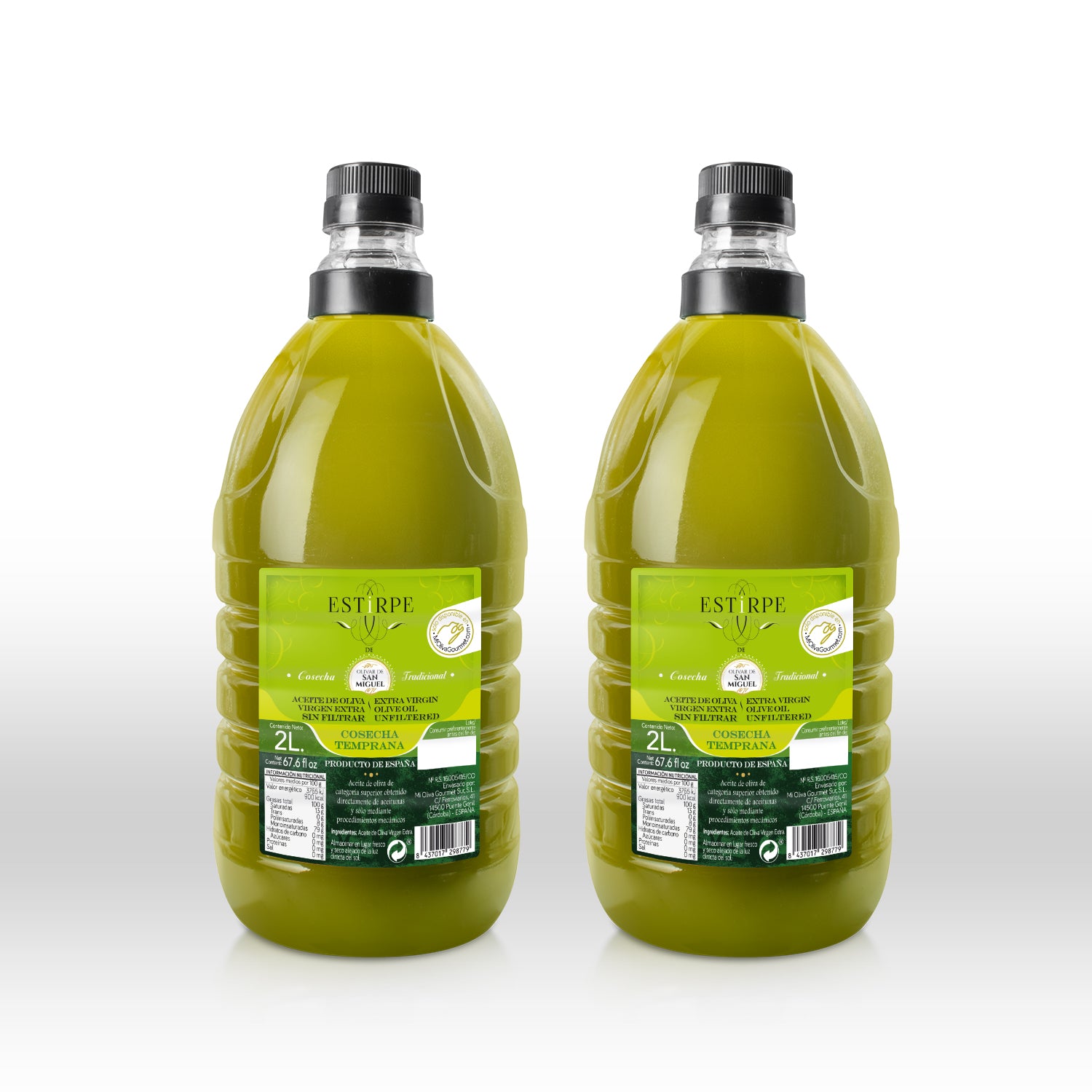
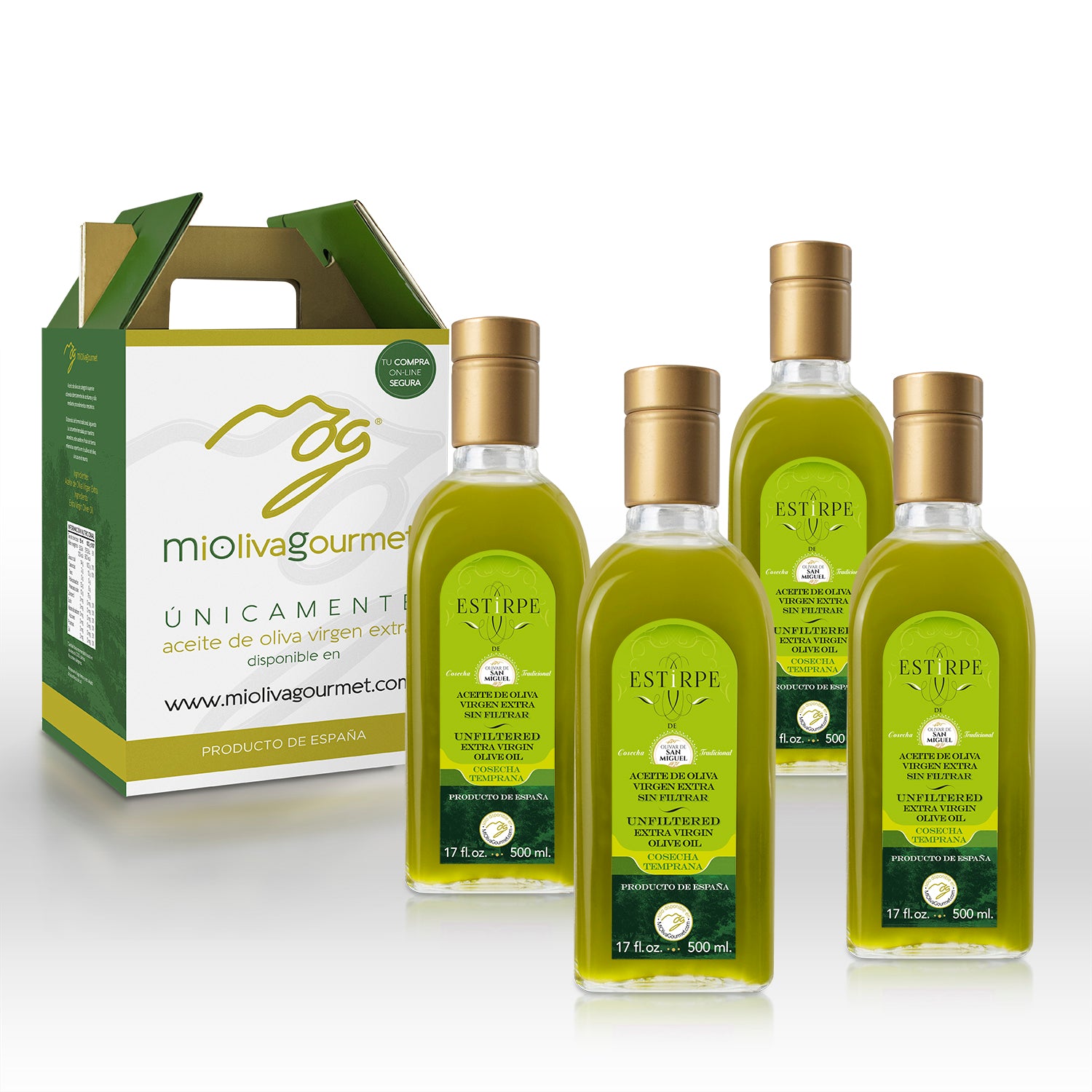
That's how Estirpe Unfiltered is born: a blend of Arbequina, Picual and Hojiblanca from the same grove, milled within 24 hours of leaving the tree, with an acidity below 0.20 and unfiltered, with the olive particles still in suspension.
They are, precisely, the three varieties in this article. In the same jerrycan.
|
★★★★★ “I've been buying my oil from Mi Oliva Gourmet for 5 years now, after trying many other places, and I stay loyal because of the excellent product they make with so much care every year. I've tried all their varieties, and not one of them leaves you indifferent.” — Raul Navas Hortelano, Barcelona · Verified buyer |
Where can you actually taste the difference between supermarket oil and oil straight from the mill?
In four specific things: whether or not you know which varieties are in it, how much time has passed since milling, whether it comes from a single grove or from several origins, and whether it keeps the olive particles. All four end up showing in your throat.
| Supermarket | Direct from the mill |
|---|---|
| ❌ You won't find the varieties it's made from | ✅ You know it contains Arbequina, Picual and Hojiblanca from the same grove |
| ❌ It may have sat on the shelf for months, even over a year, exposed to light and heat | ✅ It's bottled and on its way to your home within days |
| ❌ A mix of origins and seasons | ✅ A single grove: San Miguel, in Puente Genil |
| ❌ Filtered so it can withstand the exposure | ✅ Unfiltered: it keeps the particles in suspension |
| ❌ The three-second test comes up blank | ✅ The test works, and you can feel it |
|
★★★★★ “The oil is of the very highest quality. Its aroma, flavor and texture carry you off to a paradise of sensations. We buy and taste good EVOO, and I think this is the best of all the ones we've tried.” — Helena Pena González, Seville · Verified buyer |
Swap the supermarket shelf for the mill
How much does an oil like this cost per day?
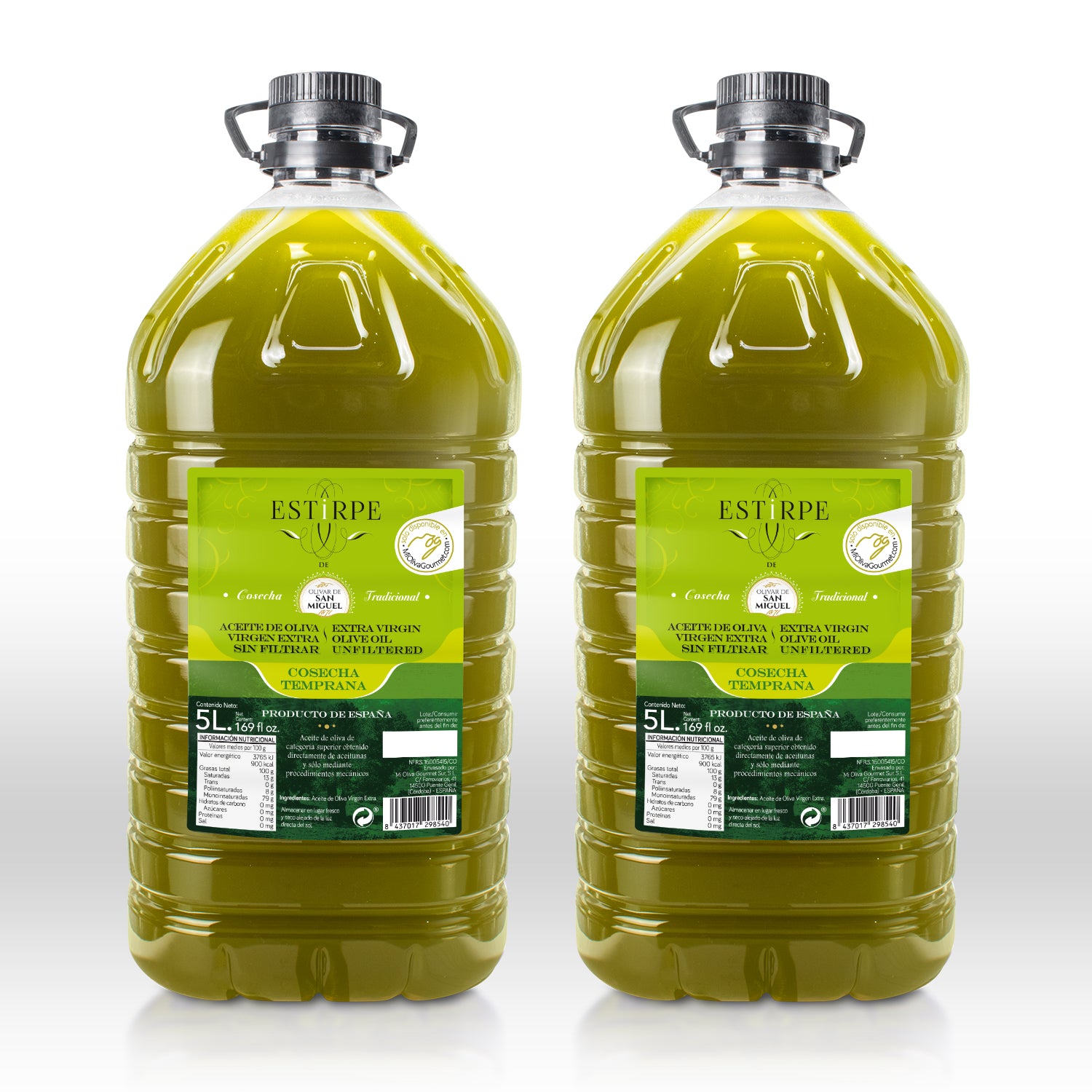
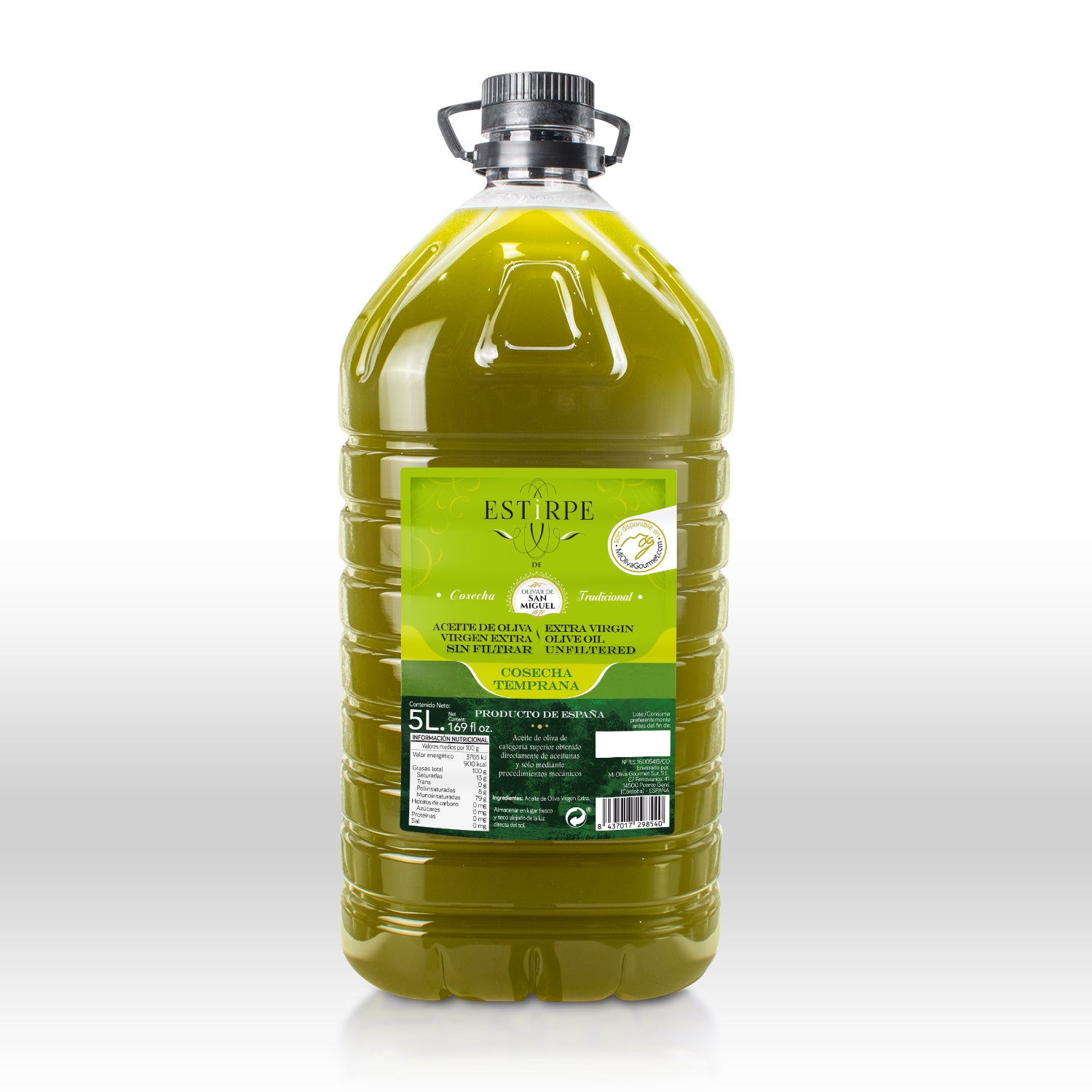
A 5-liter jerrycan of Estirpe Unfiltered currently costs €58.95. At thirty milliliters a day — two tablespoons — it lasts around 166 days: 35 cents a day. With the three-jerrycan pack, it works out to 27 cents a day.
Thirty milliliters isn't an arbitrary figure: it's the amount that has become a popular daily reference, and we talk about it in this article.
Set it next to a vending-machine coffee — that's the comparison our own customers make most often.
Is this your first order?
We'll send you our dark-glass, drip-free oil cruet for free — the one that protects the oil from light and doesn't leave a single drop on the counter.
ACEITERA-GRATIS
What do people who already do the test at home say?
|
★★★★★ “I'm no oil expert. I can only speak from my own experience of tasting it. I love having it raw at breakfast. Estirpe Unfiltered is one of the best oils I've ever tasted and enjoyed. Its aroma, its nuances of flavor connect me with nature.” — Hilario Pablos Abella, Lalín (Galicia) · Verified buyer |
Estirpe Unfiltered has 316 reviews, 97% of them five stars.
Frequently asked questions
What is the best olive oil variety?
There's no single best in the abstract: there's a best one for each use and each palate. Arbequina shines in baking and delicate dishes, Hojiblanca in gazpacho and oily fish, Picual with tomato, meat and high-heat cooking. A good blend of all three aims to capture the best of each in a single oil.
Which variety is the most peppery?
Picual, by a long way. Its pepperiness lingers and settles at the back of the throat. Hojiblanca is lightly and briefly peppery, and Arbequina barely at all.
Are pepperiness and bitterness defects?
Quite the opposite: they're a sign that the oil has kept its polyphenols. An extra virgin oil that isn't bitter or peppery at all is usually made from very ripe olives or has been around for quite a while.
Do two oils of the same variety taste the same?
No. The variety sets the general profile, but soil, climate, water and harvest date all change it. Two Picuals from different areas are easy to tell apart in a tasting. That's why Designations of Origin protect the variety and the area together, never the variety alone.
Which variety is best for frying?
Picual. It has the most oleic acid and the most natural antioxidants, which is why it stands up best to high temperatures and oxidation.
Can I do the three-second test with any oil?
Yes, with any extra virgin oil. Bear in mind that the bottling date matters: an oil from previous seasons gives fainter signals, even if its variety is an intense one.
Which varieties are in Estirpe Unfiltered?
Arbequina, Picual and Hojiblanca, all from the Olivar de San Miguel in Puente Genil (Córdoba). Our head miller decides the proportion every season.
Try the test with an oil that answers back
P.S. If you do the test tonight, try it with someone at home too, without telling them what to look for. It's remarkable how quickly people find the words when the oil hands them over.
P.P.S. And if your oil comes up blank, don't throw it away: it's still perfectly good for frying and high-heat cooking. Save the good one for drizzling raw — that's where you'll notice it.
About the author. Julio César de la Vega Fernández, co-founder of Mi Oliva Gourmet alongside Ricardo and Miguel Morales Chacón (Migue), fourth-generation olive growers in Puente Genil, Córdoba.




Leave a comment
This site is protected by hCaptcha and the hCaptcha Privacy Policy and Terms of Service apply.