

Unfiltered olive oil: A culinary gem you have to try
📅 Updated: July 2026
Unfiltered olive oil is EVOO bottled exactly as it leaves the mill, with the olive's natural particles still held in suspension. That's why it arrives cloudy, why it tastes more intense than any supermarket oil, and why first-timers usually go through two very different moments: doubt when they see the jerrycan… and surprise at the first slice of toast.
In this guide we explain exactly what it is, why cloudiness is the best sign an oil can give you, how to use it, how to store it and where to get it freshly bottled.
- What exactly is unfiltered olive oil?
- Why does it arrive cloudy (and why is that the best sign)?
- How is it different from supermarket oil?
- How do you use it in the kitchen?
- How should you store it and how long does it last?
- Why will you almost never find it in a supermarket?
- How much does it cost to keep this gem in your pantry?
- What do people who already have it at home say?
- Frequently asked questions
What exactly is unfiltered olive oil?
It's Extra Virgin Olive Oil that skips industrial filtering: it settles naturally and is bottled with tiny particles of olive pulp still in it. In Spain it's also known as “aceite en rama”. The result is an oil with a denser texture, a more pronounced aroma and a more intense flavor: the closest thing to tasting the oil straight at the mill.
Those particles give it its distinctive look and much of its personality. Together with very low acidity and olives picked at just the right moment, they are the signature of an oil that reaches your table just as it was born.
Why does it arrive cloudy (and why is that the best sign)?
The cloudiness is olive pulp in suspension: visible proof that the oil hasn't gone through industrial filtering and clarifying. A crystal-clear supermarket oil has been treated to last for years on a shelf. A cloudy one is freshly bottled and keeps its aroma, flavor and natural compounds intact, such as polyphenols.
Even so, first impressions can be misleading. That's what happened to José María, one of our customers in Pamplona: when his order arrived, the people who saw it asked him what on earth he'd bought. His answer was to make a slice of toast and let them taste it. Here's what he wrote afterwards:
|
★★★★★ “When the product arrives cloudy and unfiltered, the uninitiated will ask you what on earth you've bought. That opinion changes completely once you make a slice of toast and let them taste it. It's an explosion of flavor in your mouth, hard to compare with anything you've tried before.” José María Rebollo Arbizu · Pamplona · Verified buyer |
As it rests, some of those particles settle at the bottom of the jerrycan, forming a natural sediment. This is normal, it doesn't affect quality, and it's actually another sign of authenticity. If you'd like to dig into the technical differences, here we compare unfiltered and filtered oil.
How is it different from supermarket oil?
One is made to last; the other is made to be enjoyed. Mass-market oil is heavily filtered and stabilized to survive months of warehousing and transport. Unfiltered oil is bottled freshly pressed and travels direct from the mill to your kitchen. You can taste that difference in every slice of toast.
|
❌ Supermarket oil Clear: heavily filtered to last for years on the shelf Flat aroma after months in storage No way of knowing which olive grove it comes from Made to last |
✅ Unfiltered EVOO from the mill Cloudy: keeps the olive pulp in suspension Freshly bottled, with the aroma of fresh olives From Migue's olive grove in Puente Genil (Córdoba) Made to be enjoyed at its peak |
I want to try unfiltered oil at home
How do you use it in the kitchen?
Always raw: that's how unfiltered oil shows its full character. On toast with tomato, in salads, gazpacho and salmorejo, over cheese or vegetables, or as a finishing touch on a stew once it's off the heat. For frying, a filtered oil is the better choice; this one is saved for the moments when the oil is the star.
If you're looking for specific ideas, try these 4 gourmet recipes with unfiltered EVOO and our complete guide to uses for unfiltered oil.
|
★★★★★ “A good oil changes everything. An exceptional oil is a revolution. This olive juice, cloudy in the bottle, goes one step further. Give it as a gift and you'll look like a star. It's a true pleasure. Please, nobody use it for frying. Raw only.” Carlos Gutiérrez García · Albacete · Verified buyer |
How should you store it and how long does it last?
Keep it somewhere cool, dry and away from light, and enjoy it within the first two or three months after bottling. The natural particles that give it its character also make it more sensitive to light and temperature, so unfiltered oil is something you buy to enjoy, not to stockpile.
This matters even more in the warmer months: we explain how to protect it in Summer and your olive oil.
Why will you almost never find it in a supermarket?
Because its short shelf life doesn't fit mass-retail timelines. An oil that's at its best for two or three months can't spend weeks moving between warehouses, distribution centers and shelves. That's why genuine unfiltered oil is bought differently: direct from the mill, freshly bottled, with the clock working in your favor.
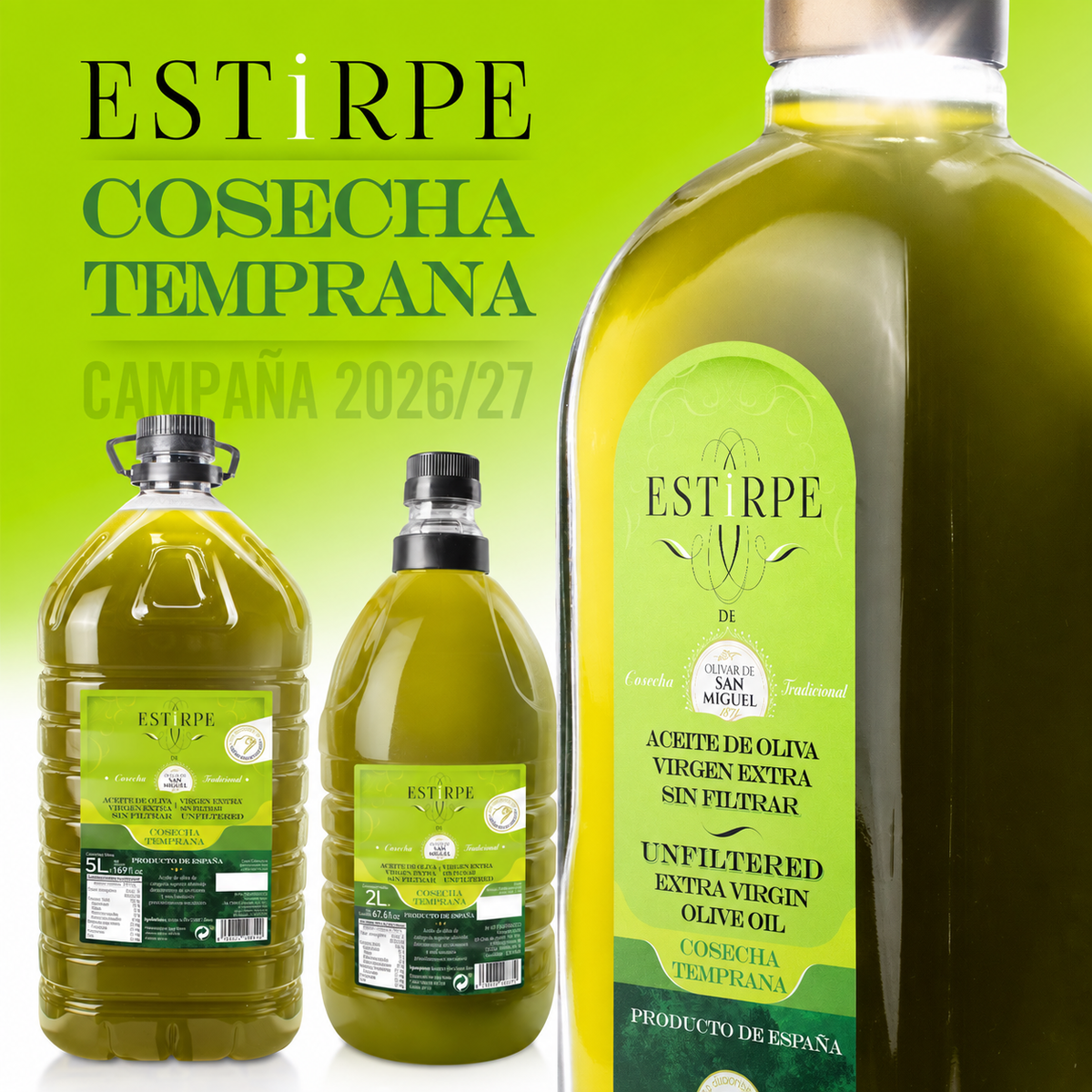
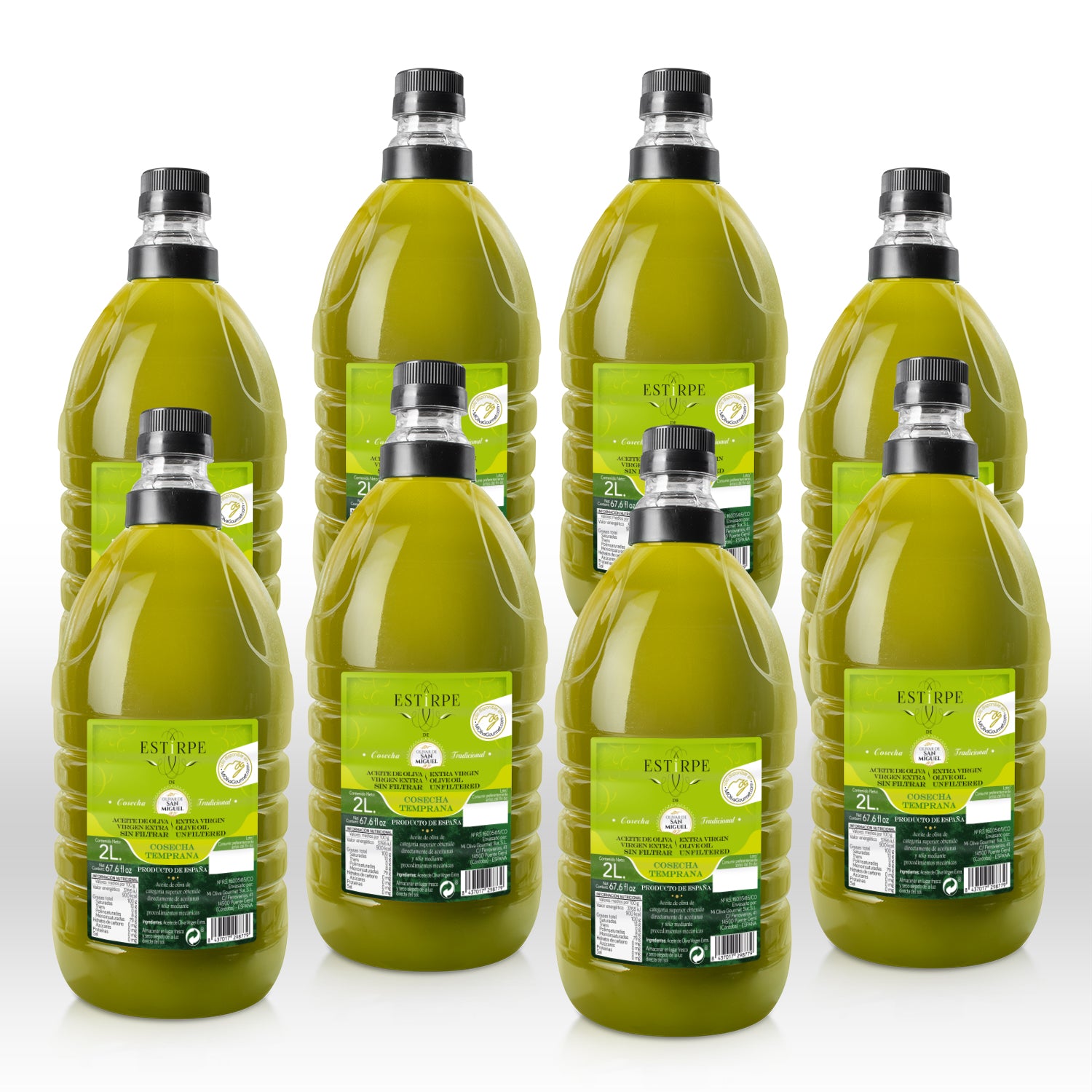
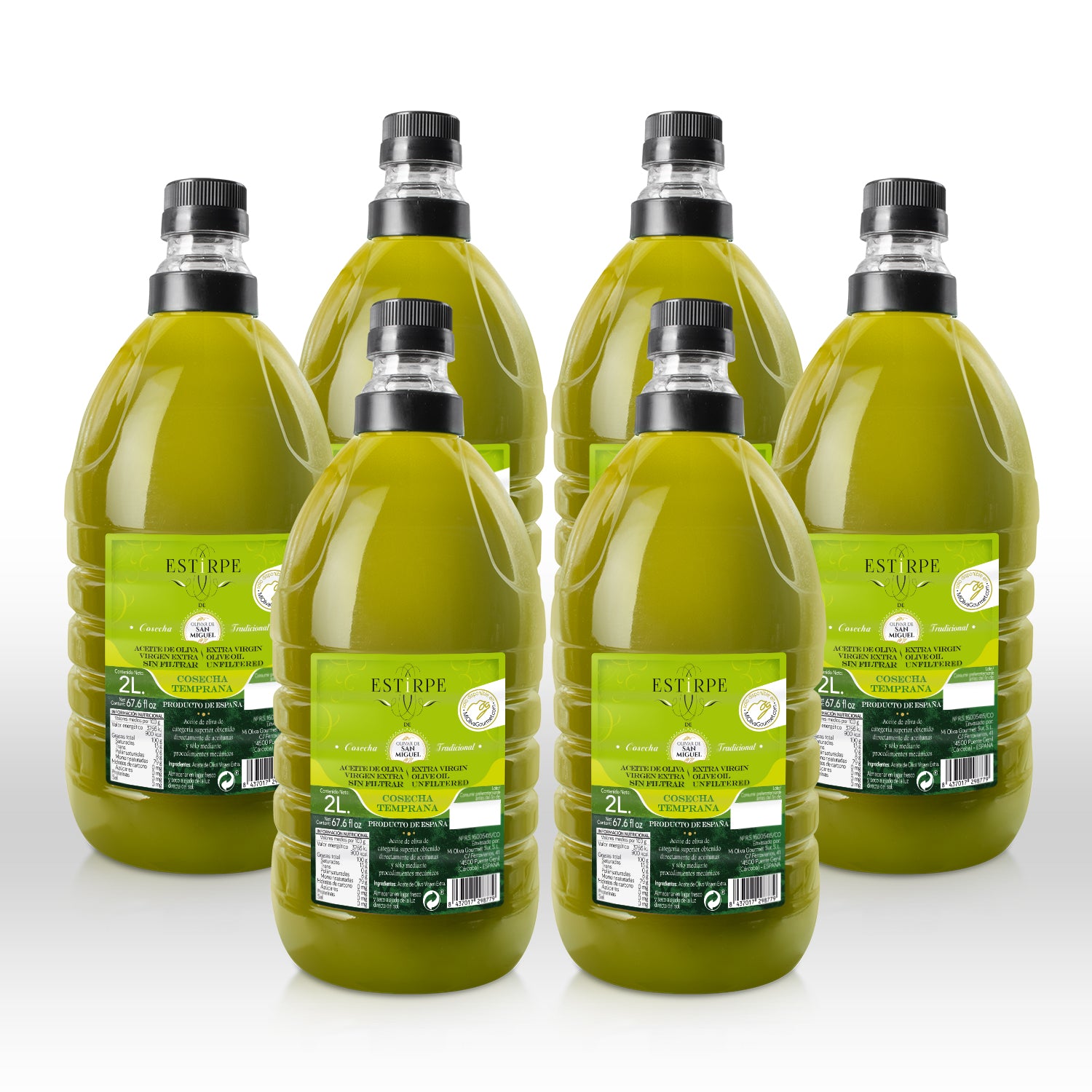
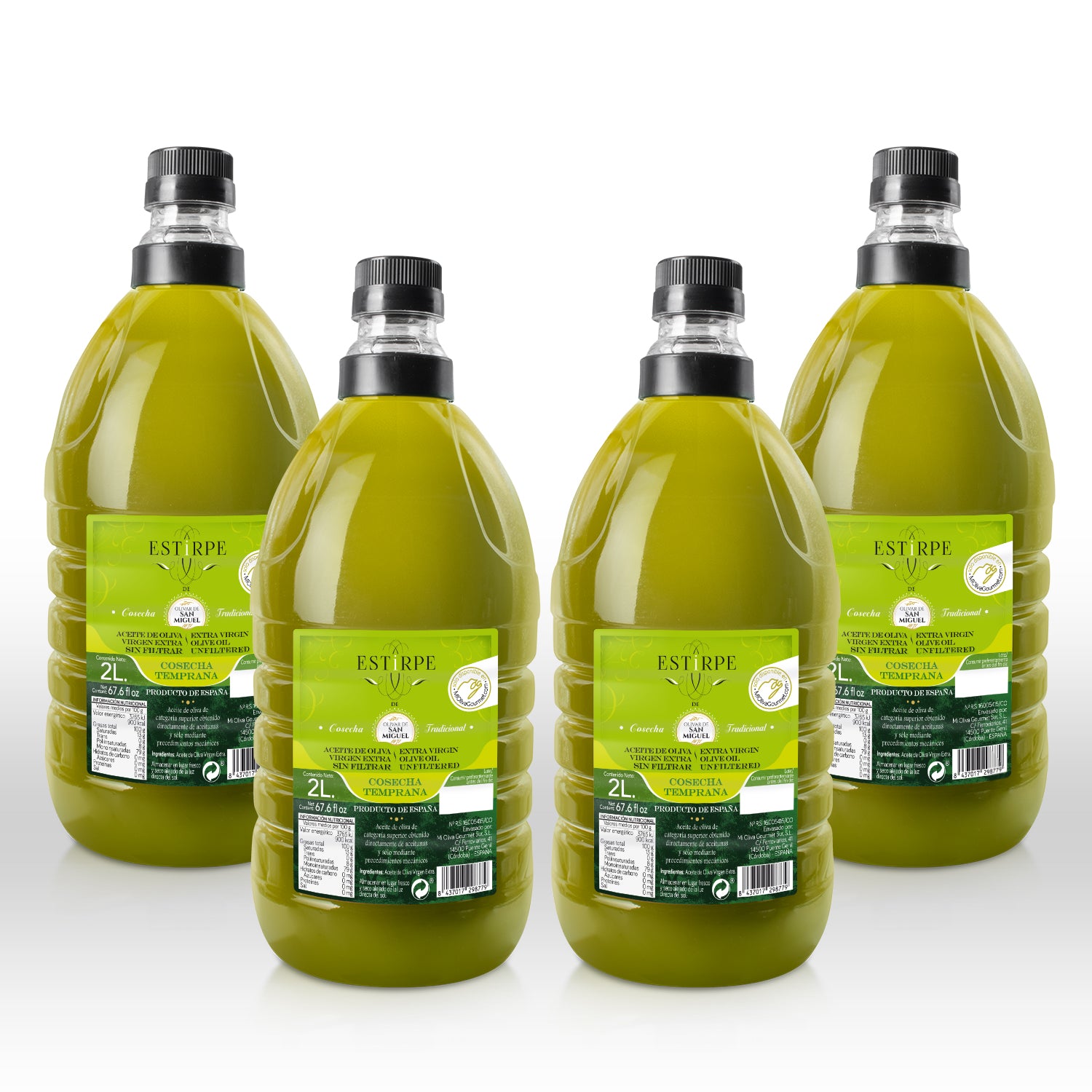
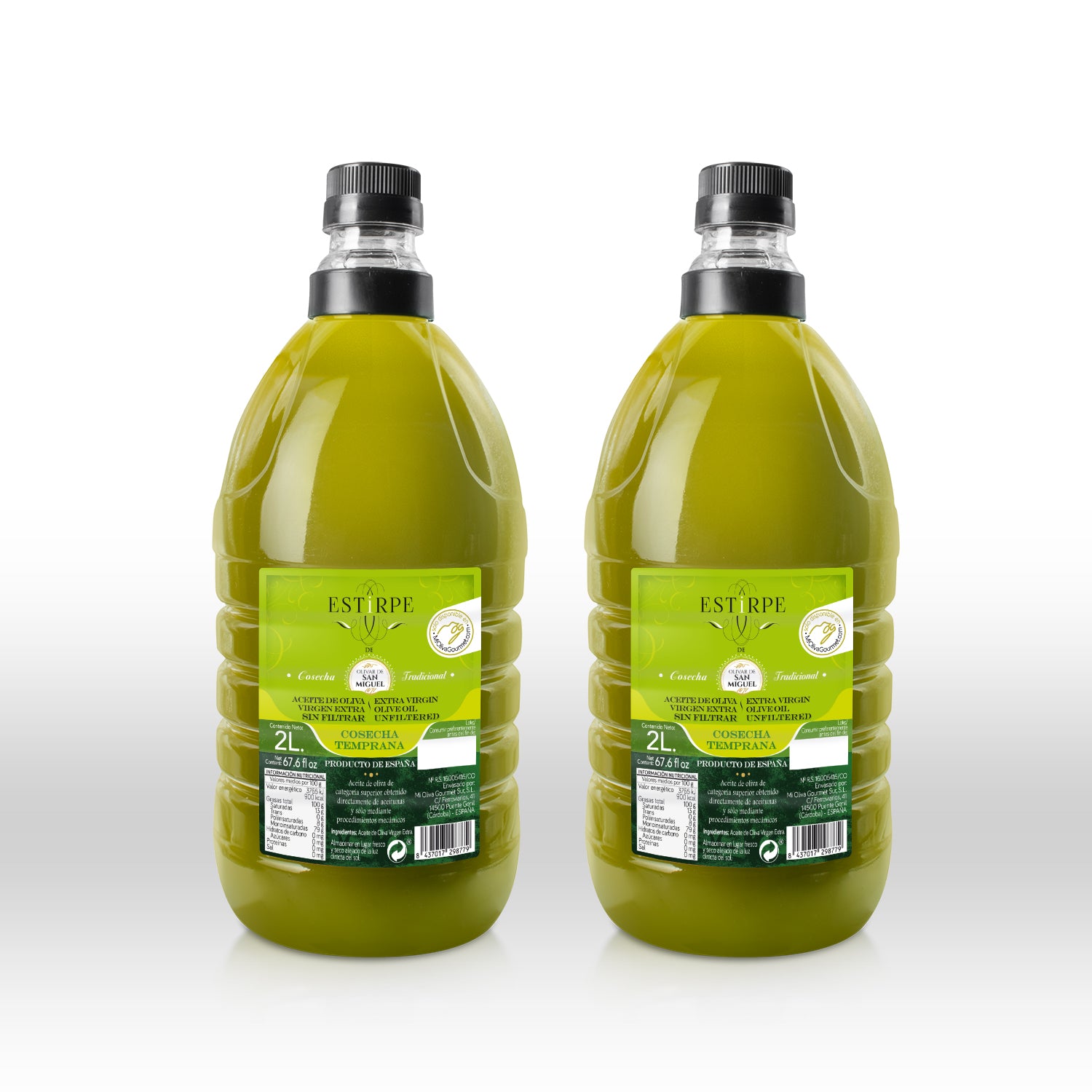
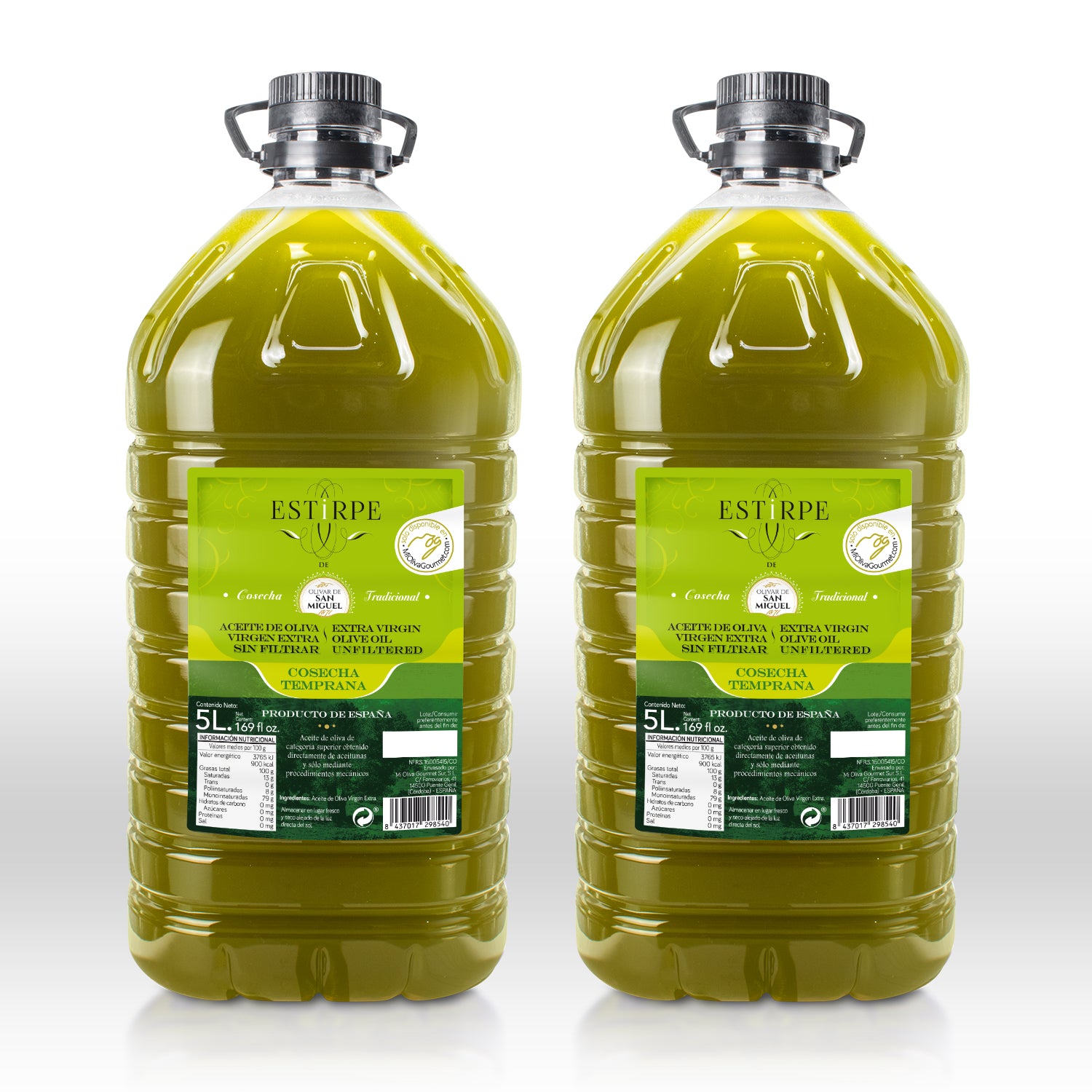
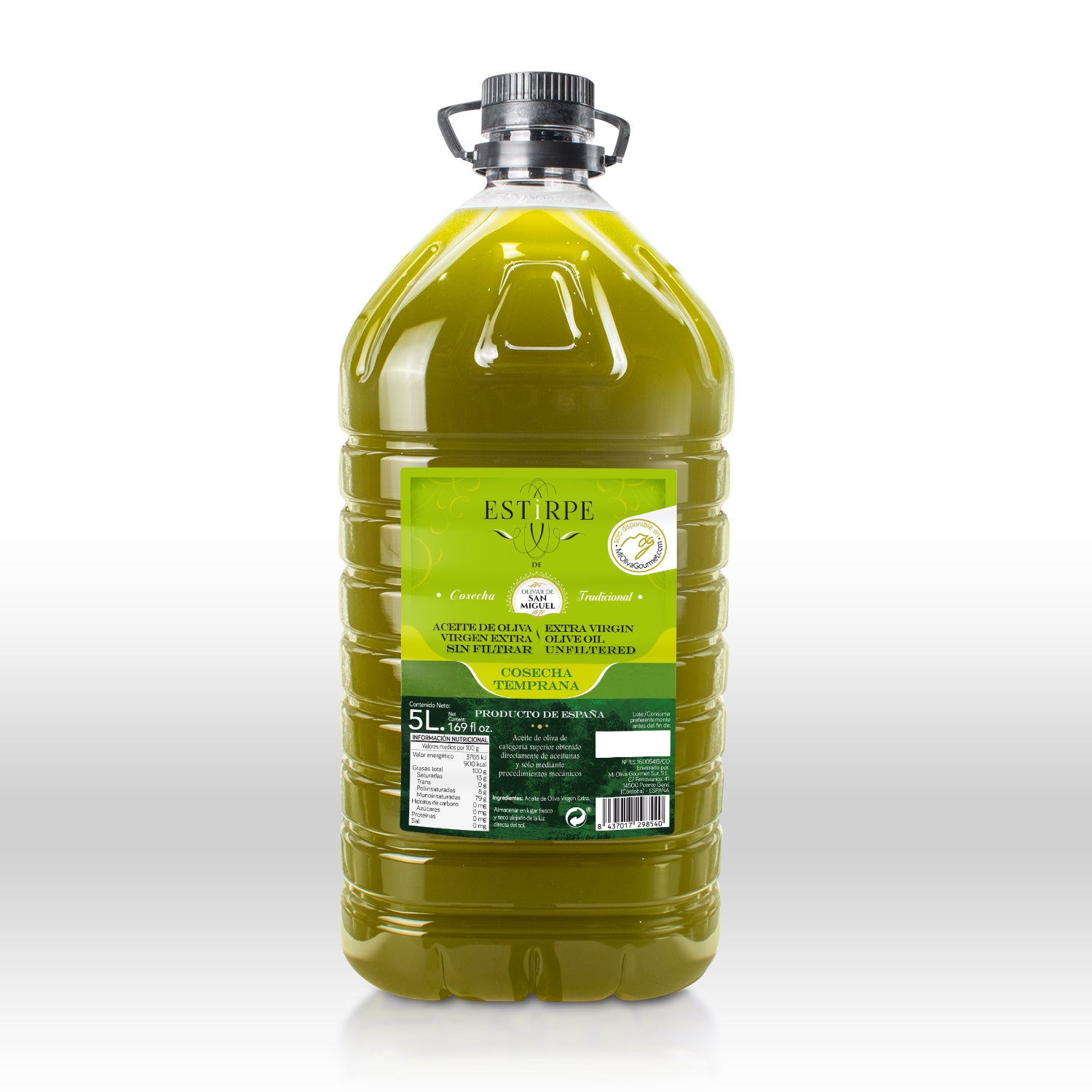
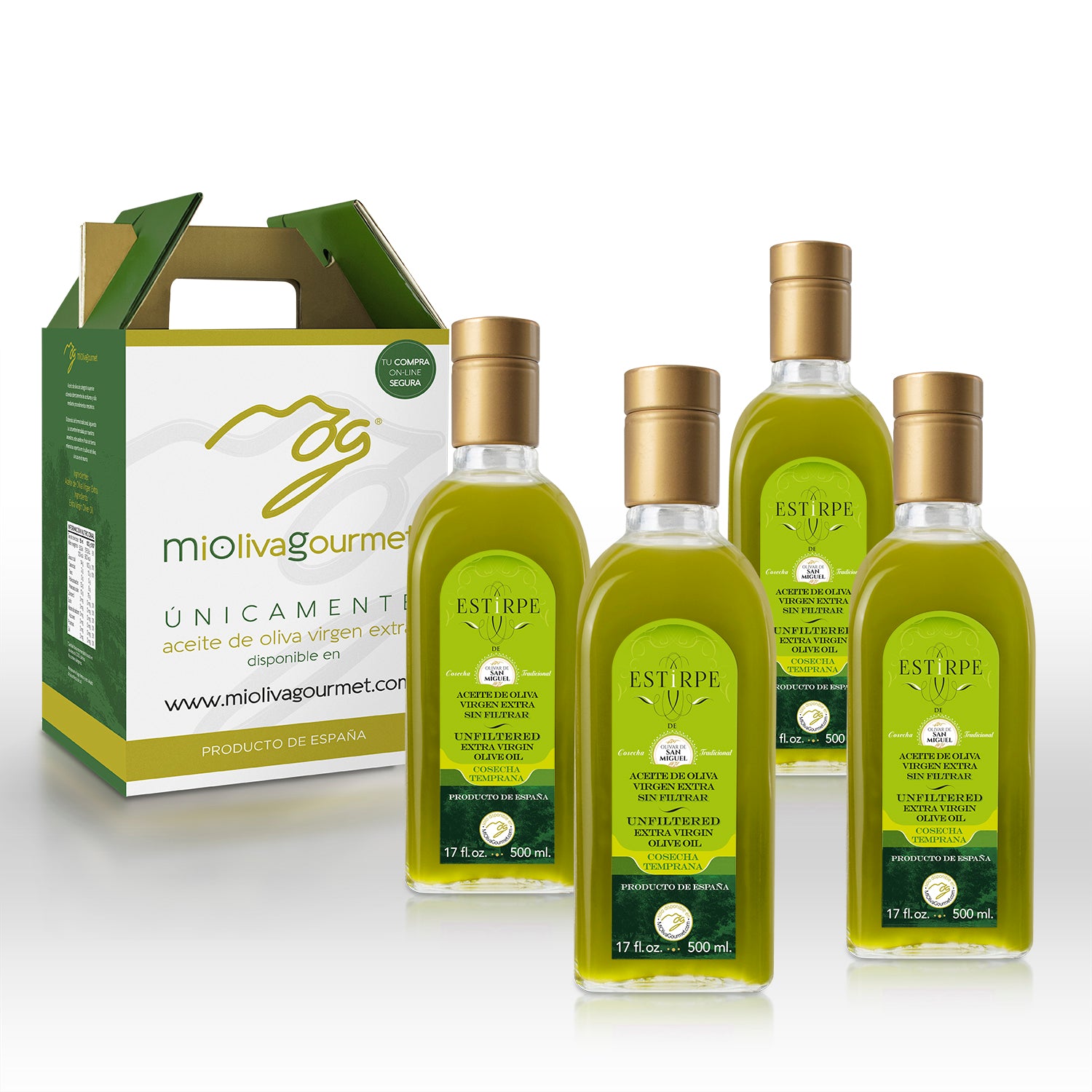
Our Estirpe Unfiltered comes from Migue's olive grove in Puente Genil, made from olives picked at the start of the season, and is bottled so it reaches your table as true olive juice.
See the Estirpe Unfiltered formats
How much does it cost to keep this gem in your pantry?
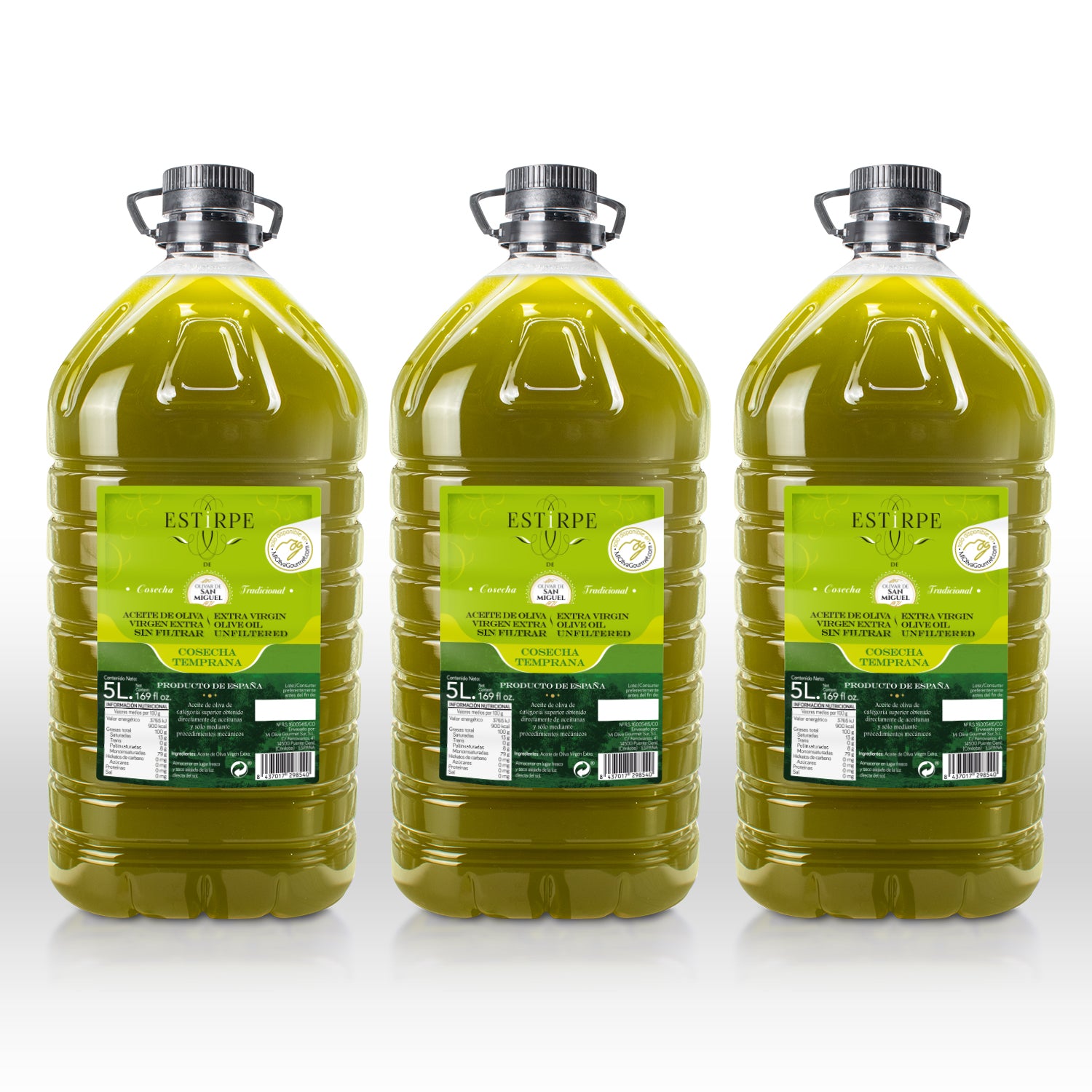
Less than you might think: the 5-liter jerrycan of Estirpe Unfiltered costs €64.95, about €0.39 a day if you use 30 ml daily. Less than a coffee, to bring an oil you won't find in any supermarket to your table every morning.
By the way, those 30 ml a day aren't a random figure — it's the amount in the famous Bryan Johnson EVOO protocol, the billionaire who put olive oil at the center of his diet.
|
🎁 Free drip-free oil cruet Use this link and get our 500 ml opaque glass oil cruet free with your first order, with the discount applied automatically: |
What do people who already have it at home say?
More than 300 verified buyers have given Estirpe Unfiltered 5 stars. Here are two of the most recent reviews:
|
★★★★★ “I've just received my second order of Estirpe unfiltered Extra Virgin Olive Oil and all I can say is that it's exquisite. From the very first moment you can tell it's a top-quality product: its aroma and color reveal its natural origin and the care that goes into making it. It has a balanced flavor, ideal for enjoying raw, on bread, salads or vegetables.” César Manuel Pena Carballo · Narón, Galicia · Verified buyer |
|
★★★★★ “I can only thank you for your work — the oil has excellent color and flavor. In my humble opinion the quality is unbeatable, and your service exceptional. I've lived in the UK for many years and, as a proper Spaniard (from Córdoba), I've tried lots of oils and several companies. You're my favorite.” Sonia Ogallas · Leeds, United Kingdom · Verified buyer |
Frequently asked questions about unfiltered oil
Why is unfiltered olive oil cloudy?
Because it keeps natural particles of olive pulp in suspension, since it doesn't go through industrial filtering. That's its natural state fresh from the mill, and the visible sign of minimal processing.
Is cloudy oil lower quality?
Quite the opposite: cloudiness shows that the oil keeps the pulp and character of freshly pressed olive juice. As it rests, it may form a natural sediment at the bottom of the jerrycan; this is normal and doesn't affect its quality.
How long does unfiltered oil last?
It's at its best during the first two or three months after bottling, stored somewhere cool, dry and away from light.
Can you fry with unfiltered oil?
It's meant to be enjoyed raw: on toast, in salads, in gazpacho or as a finishing touch on a dish. For frying, a filtered Extra Virgin Olive Oil is the better choice.
Why isn't unfiltered oil sold in supermarkets?
Its short shelf life doesn't fit mass-retail timelines. That's why it's bought direct from the mill, freshly bottled.
Are “unfiltered” and “en rama” the same thing?
Yes: they're two names for the same oil, the one that keeps its natural particles because it isn't filtered.
Order your Estirpe Unfiltered with a free oil cruet
💬 Share this guide on WhatsApp with someone who's still buying clear oil
|
About the author Julio César de la Vega Fernández co-founded Mi Oliva Gourmet with Migue, a fourth-generation olive grower in Puente Genil (Córdoba). For more than 9 years they have been bringing their unfiltered, freshly bottled Extra Virgin Olive Oil straight from the olive grove to more than 40,000 homes. |




Leave a comment
This site is protected by hCaptcha and the hCaptcha Privacy Policy and Terms of Service apply.