
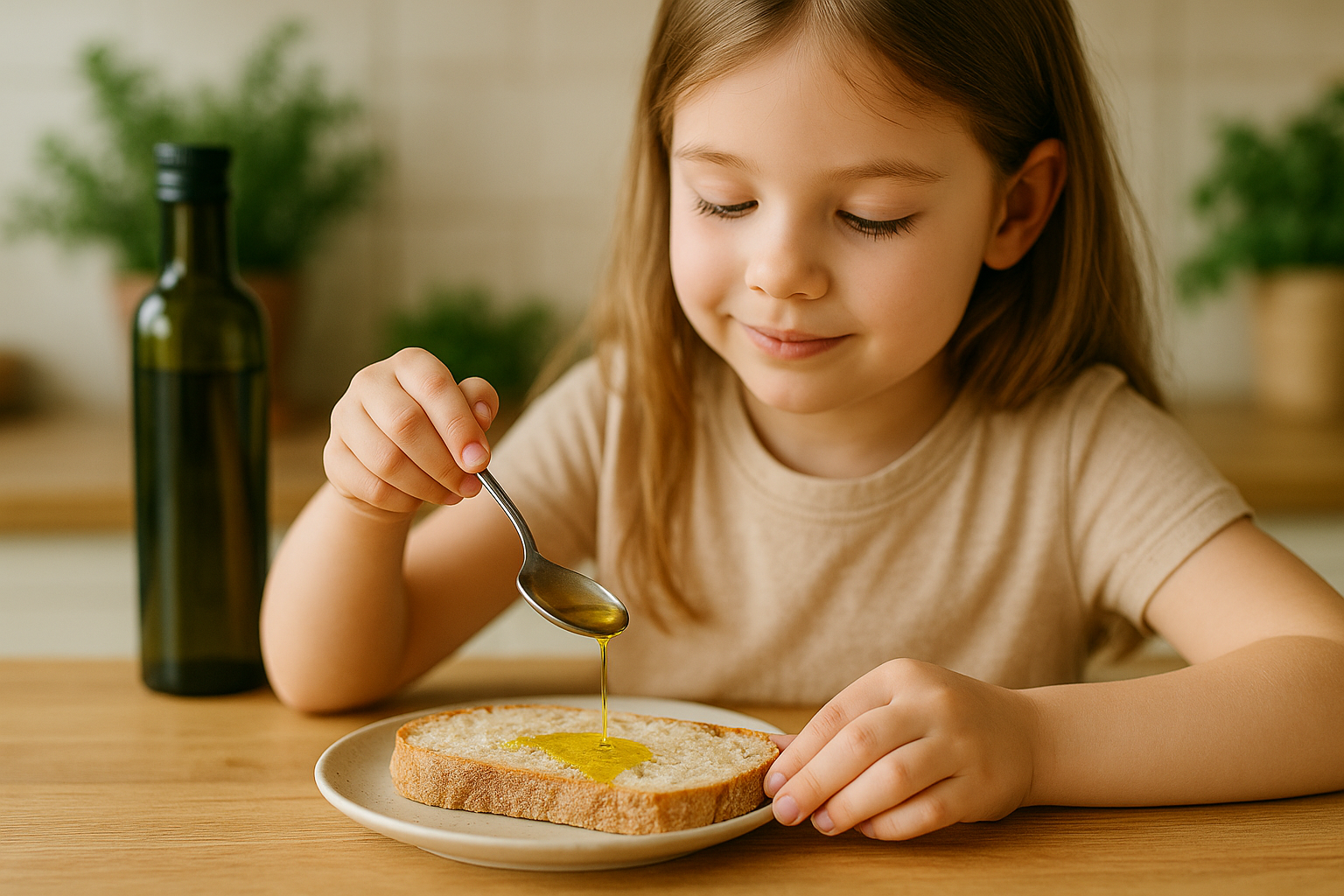
Is Extra Virgin Olive Oil Good for Children?
📅 Updated April 2026 · Reading time: 6 minutes
Quick answer
Yes, Extra Virgin Olive Oil is good for children and can be introduced from 6 months of age. The Spanish Association of Paediatrics recommends adding a teaspoon (5 ml) to purées and porridges from the start of complementary feeding. What most parents don't know is that the quality of the oil matters just as much as the quantity — and that's where the real difference lies.
If you're a parent, you've probably searched "can I give my baby olive oil?" at some point. The answer is simple: yes, and you should. But there's one detail that completely changes what your child actually gets — and most parents overlook it.
Every study that confirms the benefits of EVOO for children was conducted using high-quality oils. Not the oil labelled "extra virgin" on a supermarket shelf that's been sitting bottled for months. The oil used in those studies had polyphenols, active vitamin E and very low acidity. The one in most kitchen cupboards does not.
Further down, we explain exactly how to tell them apart. But first, what the science says about when to start and how much to use.
In this article
When can babies start having EVOO?
Babies can start having Extra Virgin Olive Oil from 6 months of age, when complementary feeding begins. The recommended amount is 1 teaspoon (5 ml) per day, added raw at the end of a purée or porridge. This recommendation comes from the Spanish Association of Paediatrics (AEPED, 2018) ↗.
Why raw, and why at the end? Because without heating it, the polyphenols and vitamin E are preserved intact — the two compounds that make EVOO genuinely different from other oils. If you want to understand what polyphenols are and why they matter, we explain it in full in this article on polyphenols in EVOO ↗.
A practical example: courgette and potato purée, blended, with 1 teaspoon of quality EVOO added just before serving. The baby gets essential monounsaturated fats for neurological development, and the flavour of the purée improves noticeably.
What are the benefits of EVOO for children?
Extra Virgin Olive Oil provides vitamin E (antioxidant), oleic acid (cardiovascular and childhood development), polyphenols (natural anti-inflammatories), and improves the absorption of vitamins A, D and K, which are essential for bones, vision and immunity. These benefits are documented by the EFSA (2010) ↗ and Harvard T.H. Chan School of Public Health ↗.
But there's a detail that almost never gets mentioned: these benefits disappear if the oil isn't high quality. A supermarket EVOO that's been bottled for months with a polyphenol count close to zero doesn't offer the same properties as a fresh, freshly bottled oil with more than 250 PPM of polyphenols. If you use an oil that has lost its bioactive compounds, your child is getting fat — but not the antioxidant protection that the science describes.
The oleic acid composition of a quality EVOO is similar to that of breast milk. It's no coincidence that paediatricians recommend it as the first fat to be introduced into a baby's diet.
If you want to understand better how the acidity of olive oil ↗ affects its real quality (and has nothing to do with taste), we explain it in detail in that article.
If quality matters, start here
Prima Mensa · Acidity 0.2° · Polyphenols >700 PPM
The oil that delivers everything you've just read. Direct from the grower, freshly bottled and backed by lab analysis to prove it.
Discover Prima Mensa + Free Oil Dispenser →How much olive oil does a child need at each age?
The amount varies by age: 1 teaspoon (5 ml) from 6 to 12 months, 1–2 teaspoons from 1 to 3 years, 2–3 teaspoons from 4 to 8 years, and 1 tablespoon (10–15 ml) from age 9 onwards. Always preferably raw to preserve its properties.
| Age | Suggested daily amount | Best use |
|---|---|---|
| 6 – 12 months | 1 teaspoon (5 ml) | Raw, added at the end of a purée |
| 1 – 3 years | 1 – 2 teaspoons | Purées, bread with olive oil |
| 4 – 8 years | 2 – 3 teaspoons | Toast, salads, pasta |
| 9 – 14 years | 1 tablespoon (10 – 15 ml) | Any dish, raw or cooked |
Important note: These amounts are guidelines and refer to EVOO added as a complement, not to total daily fat intake. Always check with your paediatrician if you have any questions about your child's diet.
Myths that many parents still believe
The three most common myths about olive oil and children are: that it causes excessive weight gain, that you should wait until age 3, and that any olive oil is equally good. All three are false according to the available scientific evidence.
❌ "Olive oil makes children put on too much weight"
At the recommended amounts, EVOO replaces less healthy fats and provides quality energy that children need to grow. It doesn't increase the risk of obesity — what does is replacing it with processed fats.
❌ "Better to wait until age 3"
The Spanish Association of Paediatrics ↗ recommends it from 6 months. Every month a child goes without quality oleic acid and vitamin E is a lost month during a critical window for neurological development. Waiting three years means wasting two and a half years of a window that doesn't come back.
❌ "All olive oils are the same"
Only extra virgin retains polyphenols and has not been through chemical refining. A plain "olive oil" contains a high proportion of refined oil and loses virtually all its bioactive compounds. If you want to understand the 3 differences between a gourmet EVOO and the rest ↗, we explain it in detail there.
3 snacks with EVOO that actually work
The best olive oil snacks for children are bread with grated tomato and EVOO (ready in 2 minutes), natural yogurt with a teaspoon of oil and honey, and a banana and spinach smoothie with a drizzle of EVOO. All three are quick, nutritious and children love them.
1. Bread + grated tomato + EVOO
Ready in 2 minutes. Vitamin C from the tomato plus healthy fat from the oil. The key is using a fresh, quality oil — the smooth flavour of a good unfiltered EVOO turns this snack into something children ask for by name.
2. Natural yogurt + 1 teaspoon of EVOO + raw honey
Omega 9 plus probiotics. Sweet, filling, and a discreet way to include olive oil without the child noticing. From 12 months onwards (honey should not be given before one year of age).
3. Banana + spinach + EVOO smoothie
Ideal after sport or physical activity. Plant-based iron plus sustained energy. The oil adds a creamy texture and helps absorb the fat-soluble vitamins from the spinach.
How to choose a good EVOO for children
This is the detail we promised at the start. A good Extra Virgin Olive Oil for children should be from a recent harvest (or freshly bottled to order), have an acidity below 0.2° and a polyphenol content above 250 PPM — the threshold that the EFSA ↗ links to the protection of blood lipids against oxidative damage.
What really makes the difference doesn't appear on most labels. Polyphenol content, bottling date and actual acidity are data points that big brands don't publish. And they are precisely the data that determine whether your child is getting a complete food or an oil that only meets the legal minimum to be called "extra virgin."
Our oils meet — and exceed — all of these criteria. Prima Mensa, for example, has an acidity of 0.2° and a polyphenol content above 700 PPM, nearly three times the 250 PPM threshold that the EFSA ↗ links to real health benefits.
Families who have already tried it
⭐⭐⭐⭐⭐
"It's an extraordinary oil. I order it for my family and for my parents. Once we tried it, we never wanted another. It's excellent — a true guarantee of quality — and we love buying it directly from the people who grow it. We really appreciate your work and the love you put into the land and into doing things properly."
M. Navarro · ✓ Verified purchase
⭐⭐⭐⭐⭐
"Spectacular! Ever since we bought it, we always put it out at gatherings and every single friend and family member has been blown away by the quality and flavour of this oil."
Javier · ✓ Verified purchase
⭐⭐⭐⭐⭐
"All I can say is that it's an explosion of flavour: toasted bread with this extraordinary oil. I can only recommend it — I'll keep using it."
Michael D. · Bremen, Germany · ✓ Verified purchase
A decision you make every day
At the start of this article we told you there was a detail most parents overlook. Now you know what it is: not every oil labelled "extra virgin" protects your child equally. The difference lies in the polyphenols, the acidity and the freshness of the oil — data that most labels don't show.
Olive oil is probably the food that appears most often in your family's diet — at breakfast, lunch and dinner. Every single one of those moments is a chance to give your children something complete, or something that only looks the part.
If you've already decided that quality matters, the only thing left is to act on it.
Make tomorrow's oil one that's worth it
Prima Mensa · Acidity 0.2° · Polyphenols >700 PPM · Direct from the grower · If you don't love it, you can return it
Try it with a free oil dispenser →→ Browse all our oils, suitable for the whole family
Frequently asked questions
Can a 6-month-old baby have olive oil?
Yes. The Spanish Association of Paediatrics ↗ recommends it from 6 months, during the complementary feeding stage, adding 1 teaspoon raw to a purée or porridge.
Is filtered or unfiltered EVOO better for children?
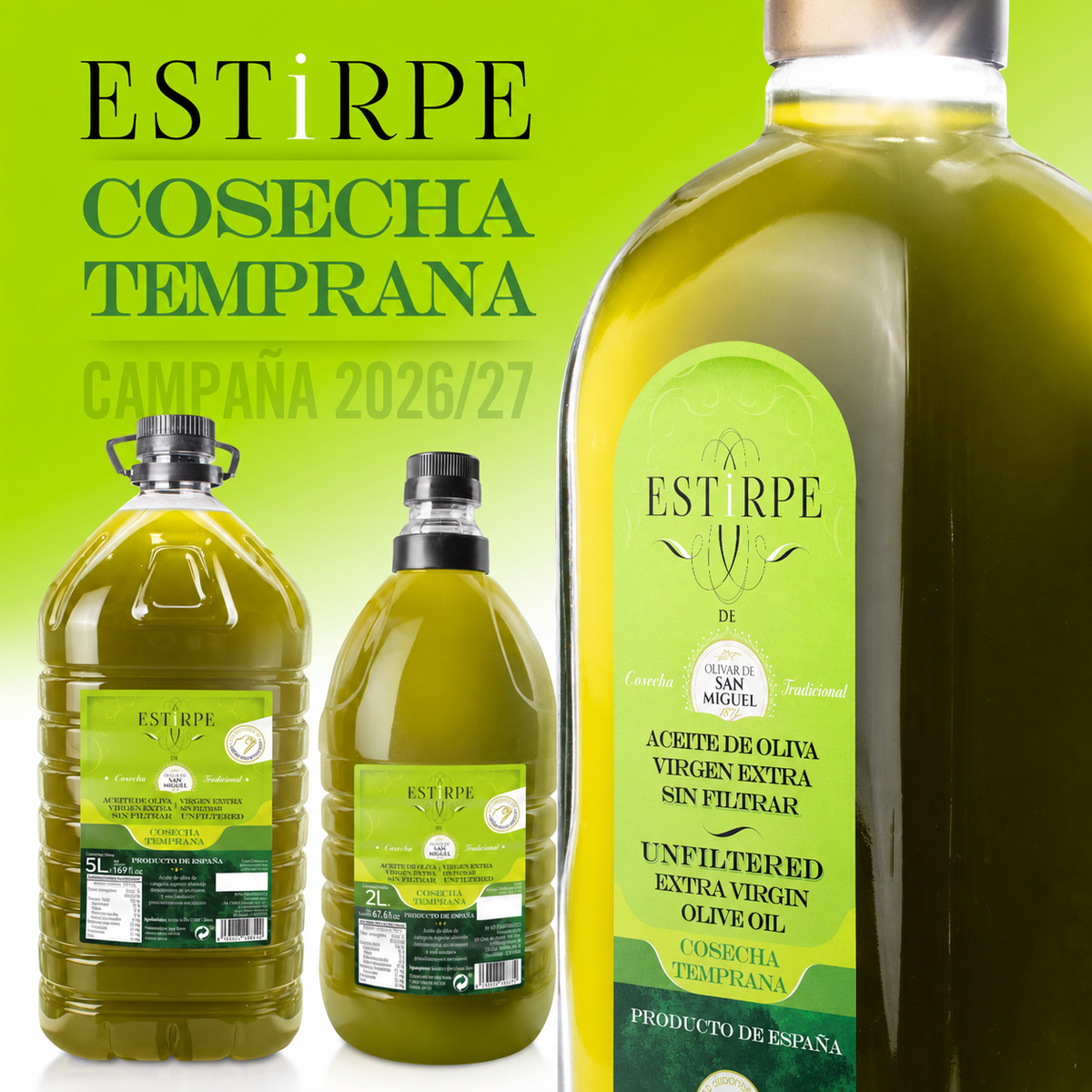
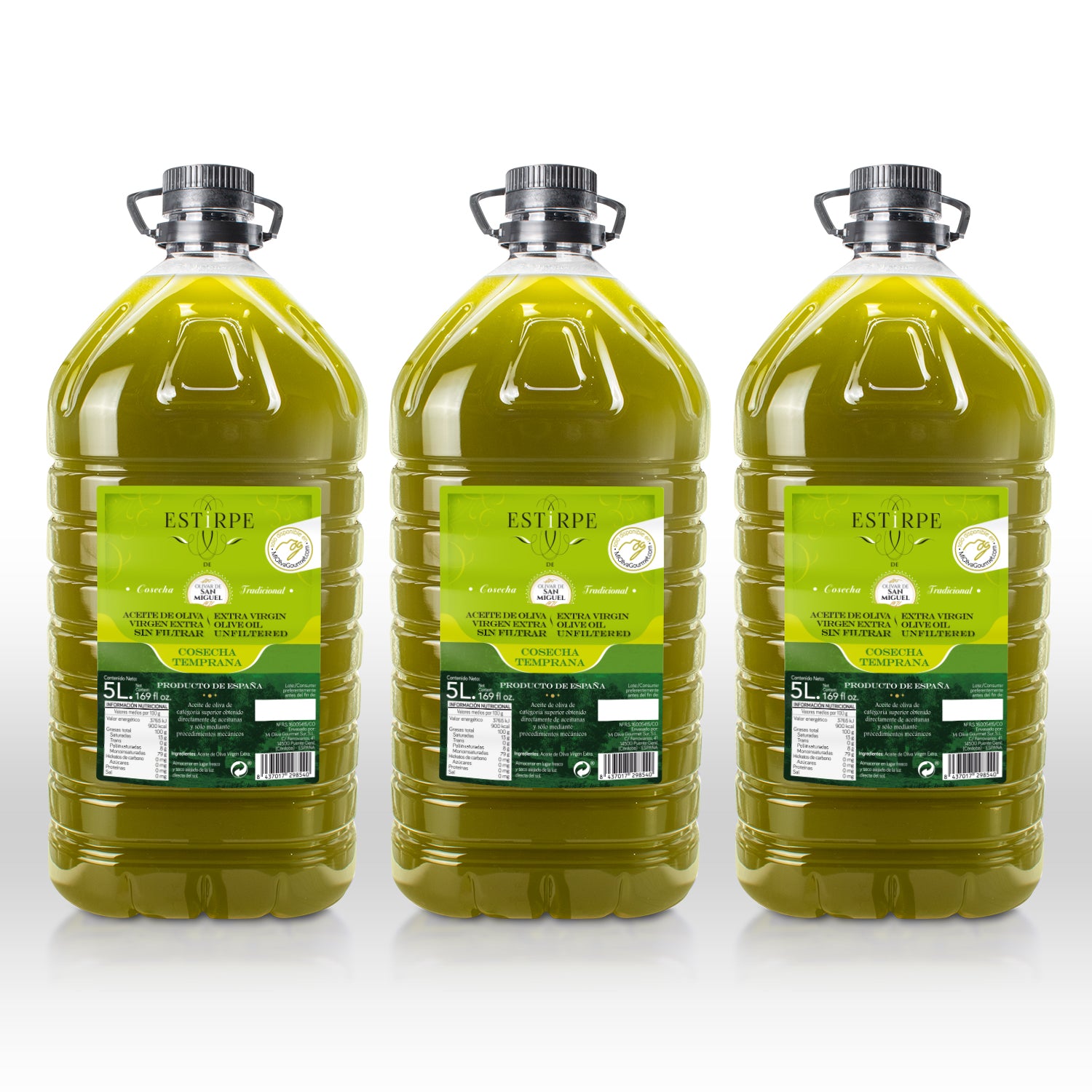
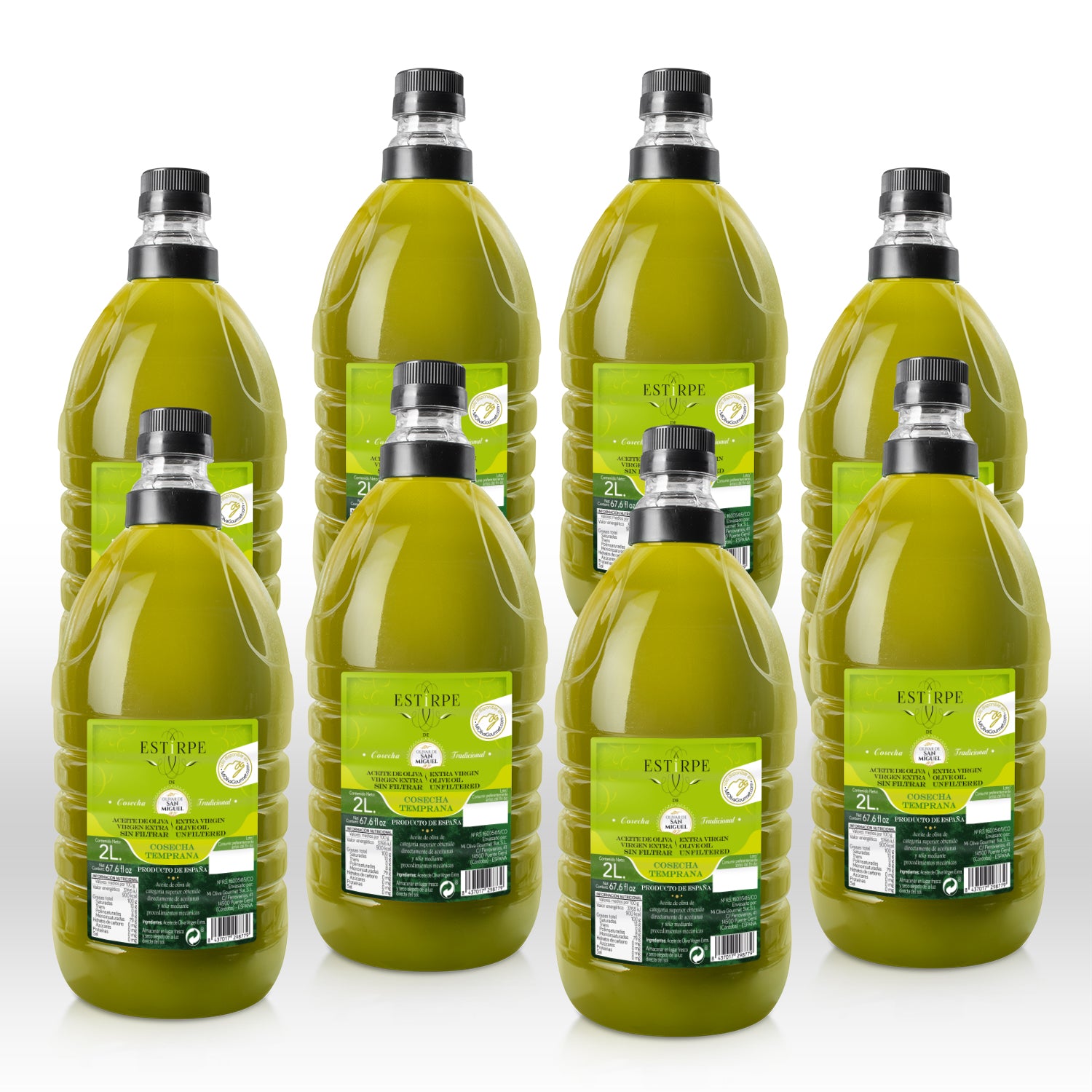
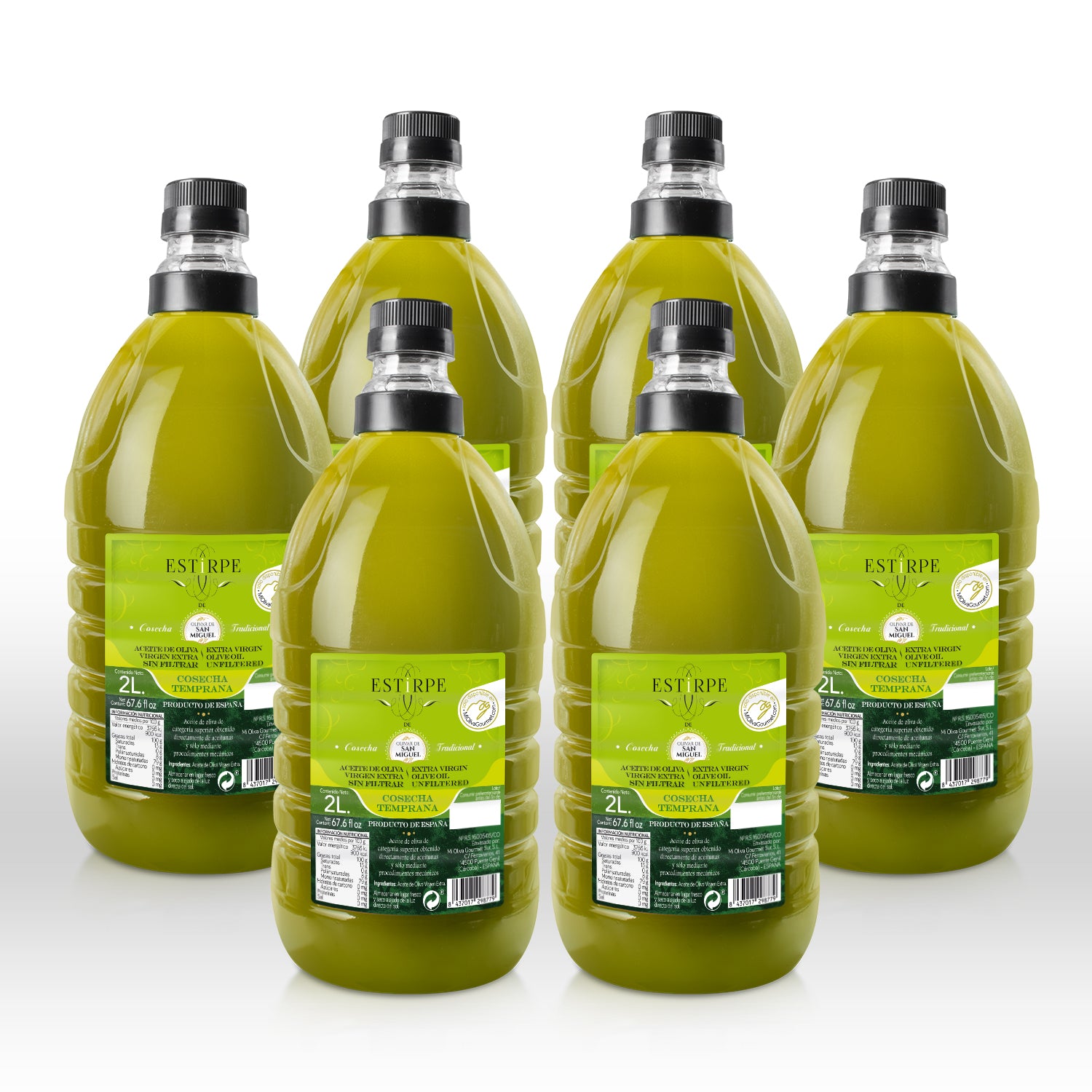
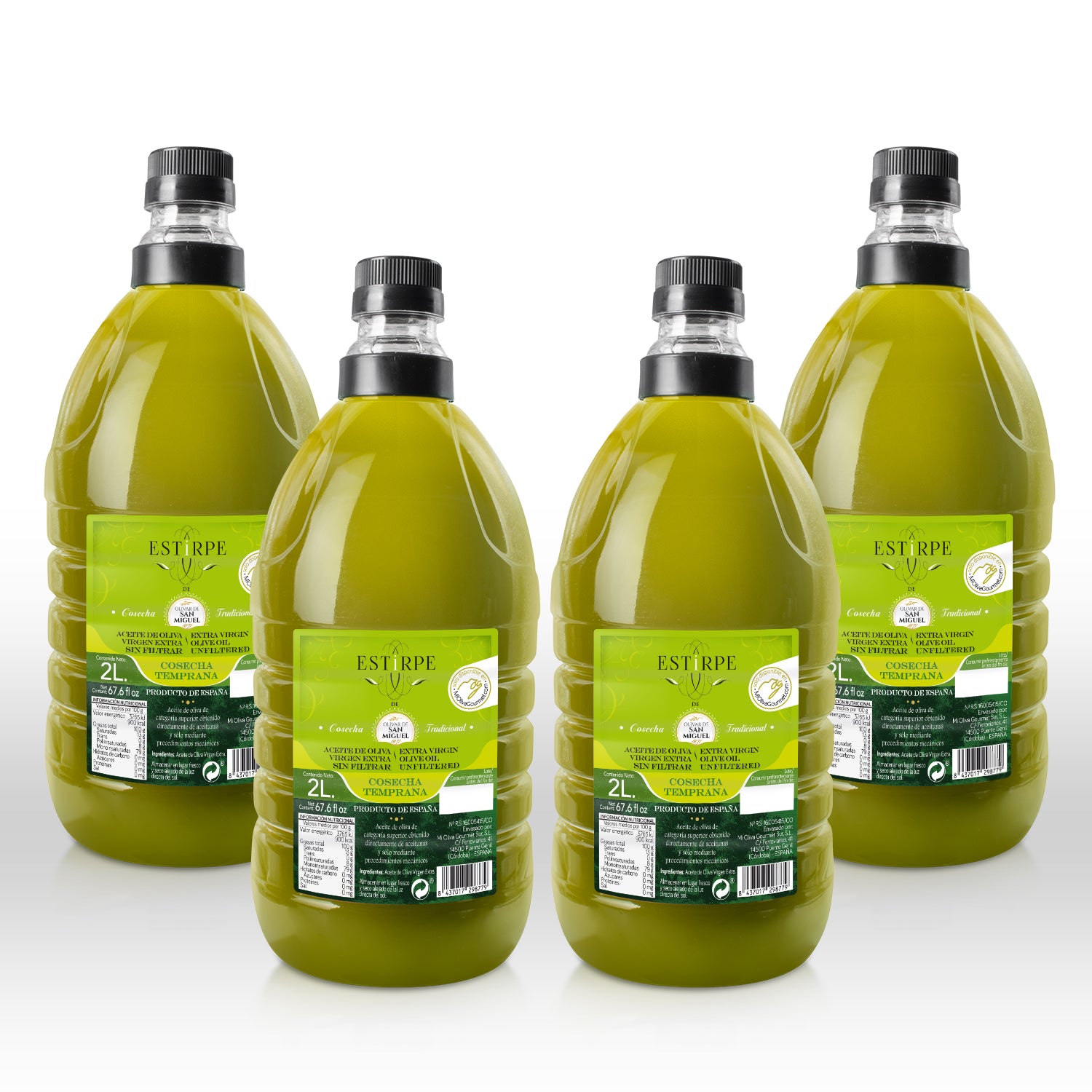
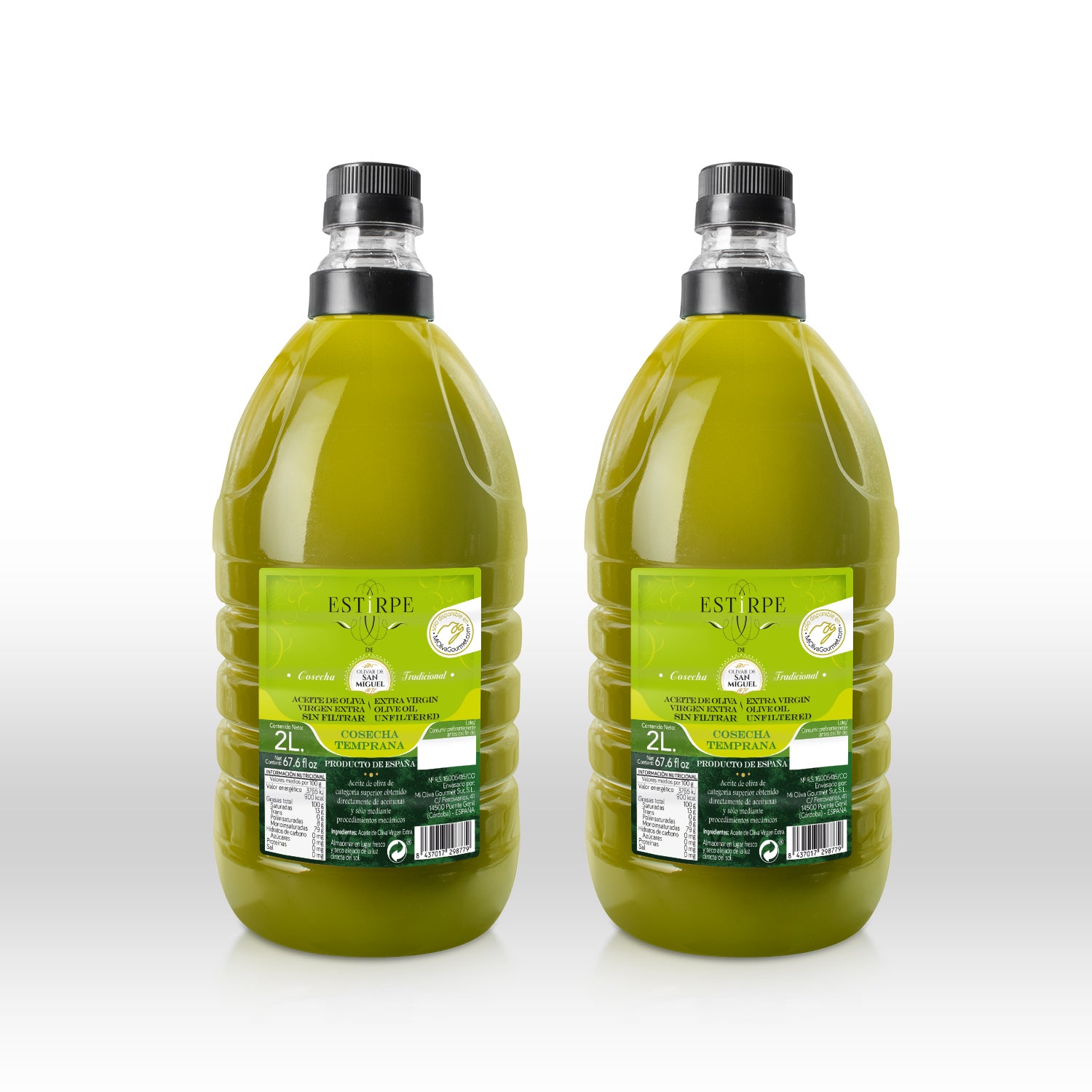
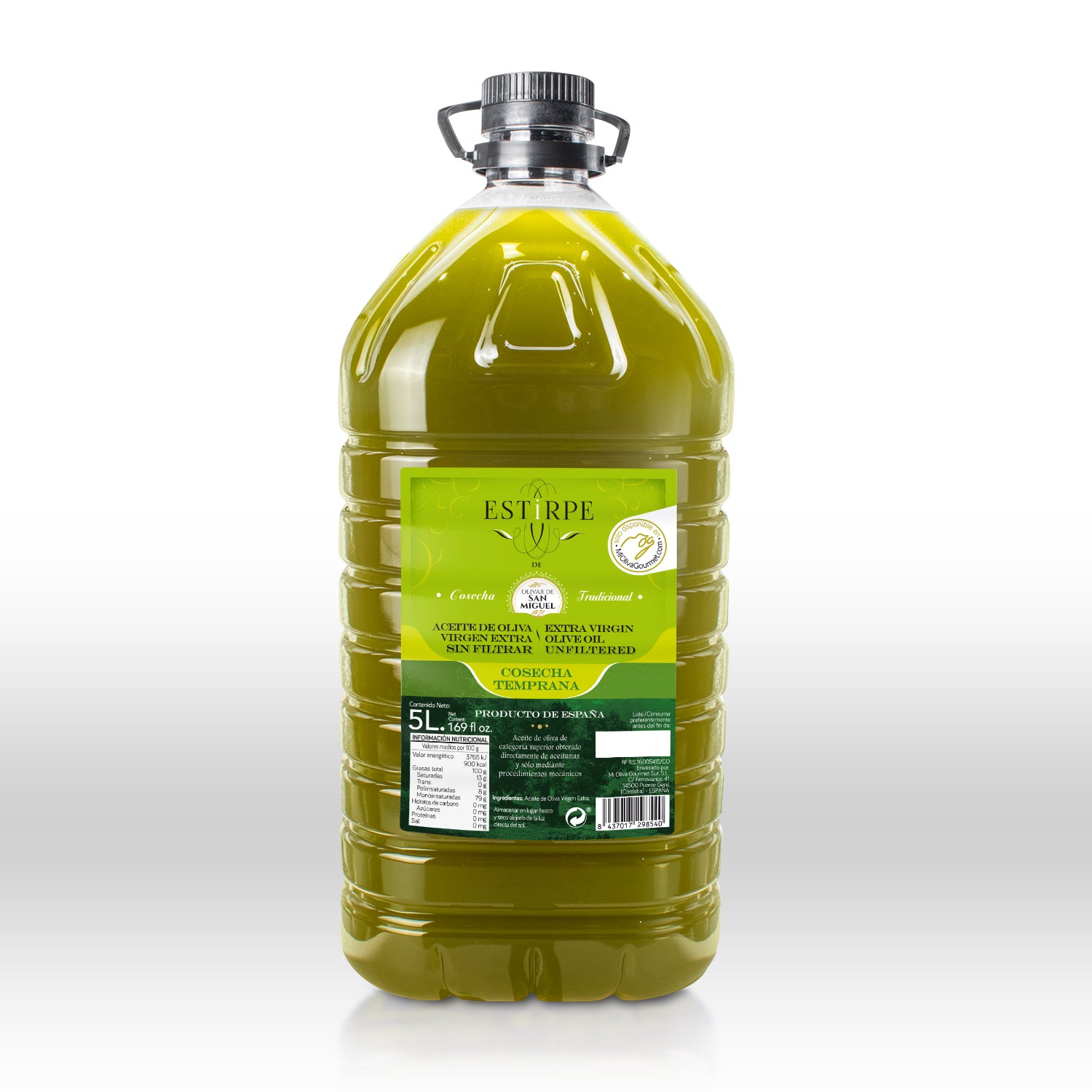
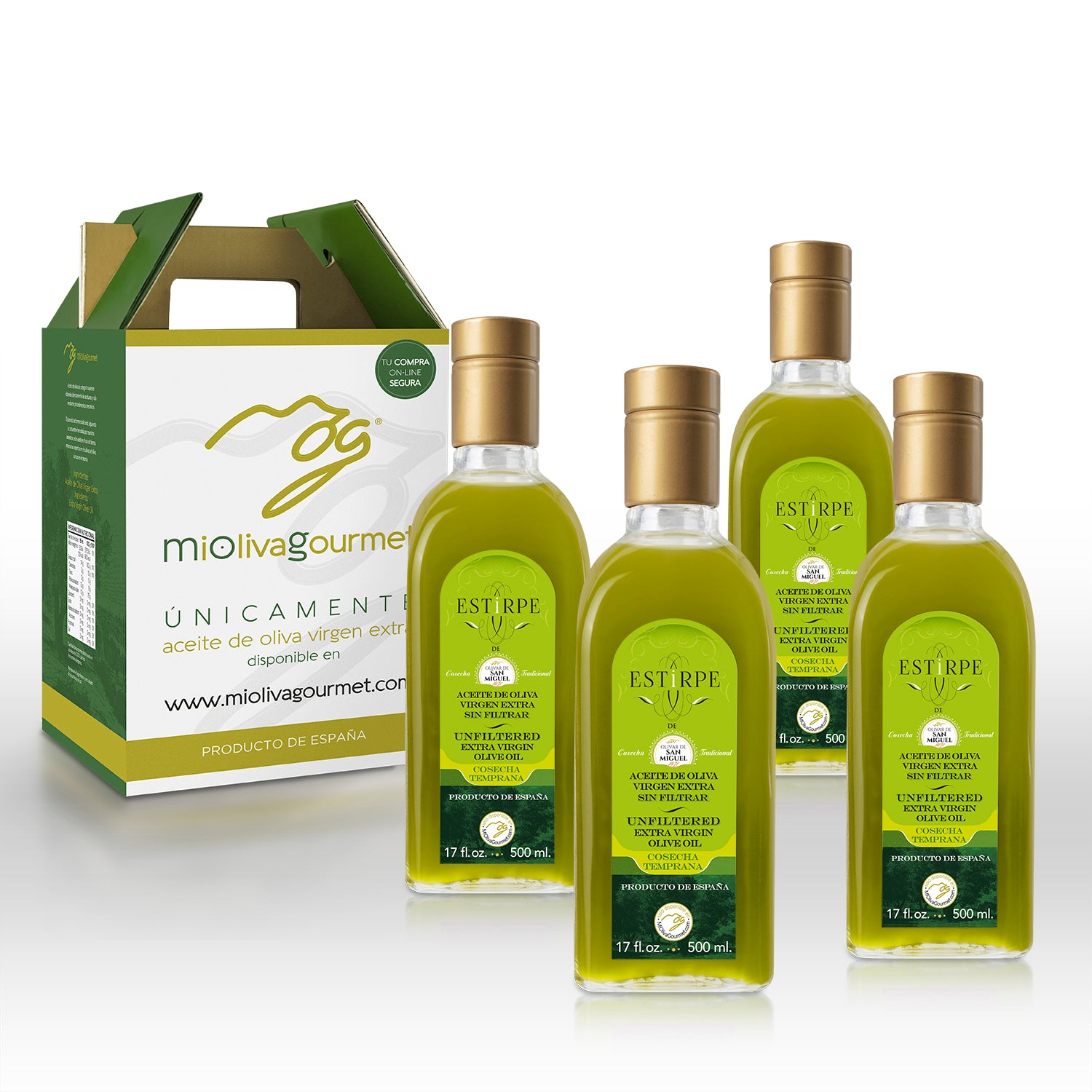
Both are suitable. Unfiltered retains more polyphenols and antioxidants, but has a more intense flavour. For young palates just getting started, a smooth filtered EVOO such as Estirpe Cosecha Tradicional can be a good first choice.
Which olive oil is best for children's nutrition?
An EVOO from a recent harvest, with acidity below 0.2° and a high polyphenol content (>250 PPM). These characteristics ensure the oil retains its nutritional properties and has not been through any refining process.
Can EVOO cause an allergic reaction in children?
Olive oil allergies are extremely rare. As with any new food, the general recommendation is to introduce it gradually and watch for any reaction over the first few days.
Can I cook with EVOO for my baby?
Yes, but the greatest nutritional benefit comes from adding it raw at the end of preparation. Heating it reduces some of the polyphenols and vitamin E, though it remains the healthiest cooking option compared to other oils.




Leave a comment
This site is protected by hCaptcha and the hCaptcha Privacy Policy and Terms of Service apply.